How Often Should You Practise Yoga as a Beginner?
New to yoga and wondering how often you should practise? Find out how many classes a week you really need and how to build a yoga practice that fits into your actual life.
If you're new to yoga, one of the first questions you might have is: how often should I actually practise?
You might have seen people doing yoga every morning, joining five classes a week or talking about having a daily practice. And if you're starting from scratch, that can make yoga feel like another thing you're supposed to fit into an already busy life.
The good news is that you don't need to practise every day to get something from yoga.
For most beginners, the more useful question isn't “How much yoga should I be doing?” but “What kind of practice can I realistically keep coming back to?”
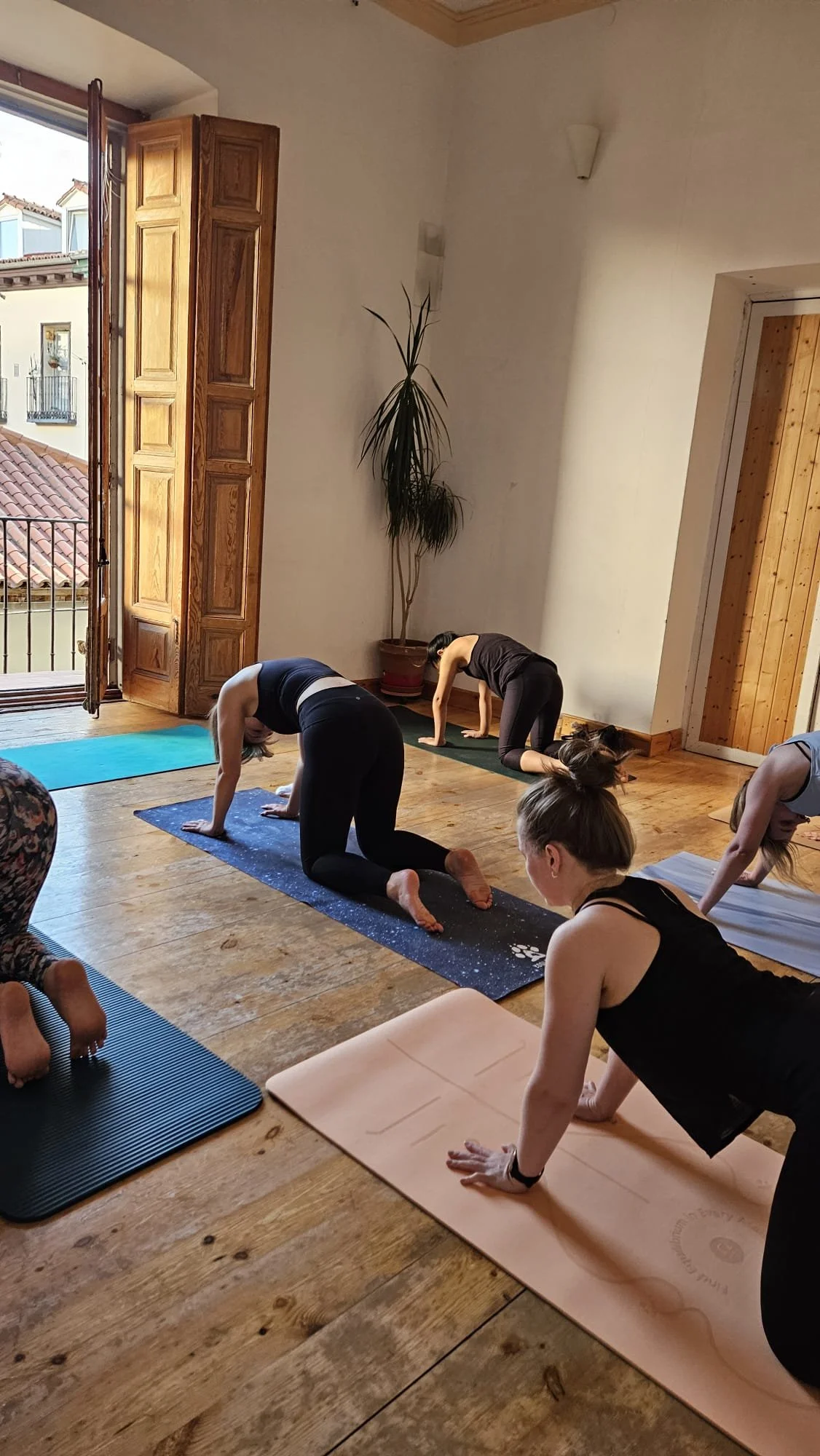
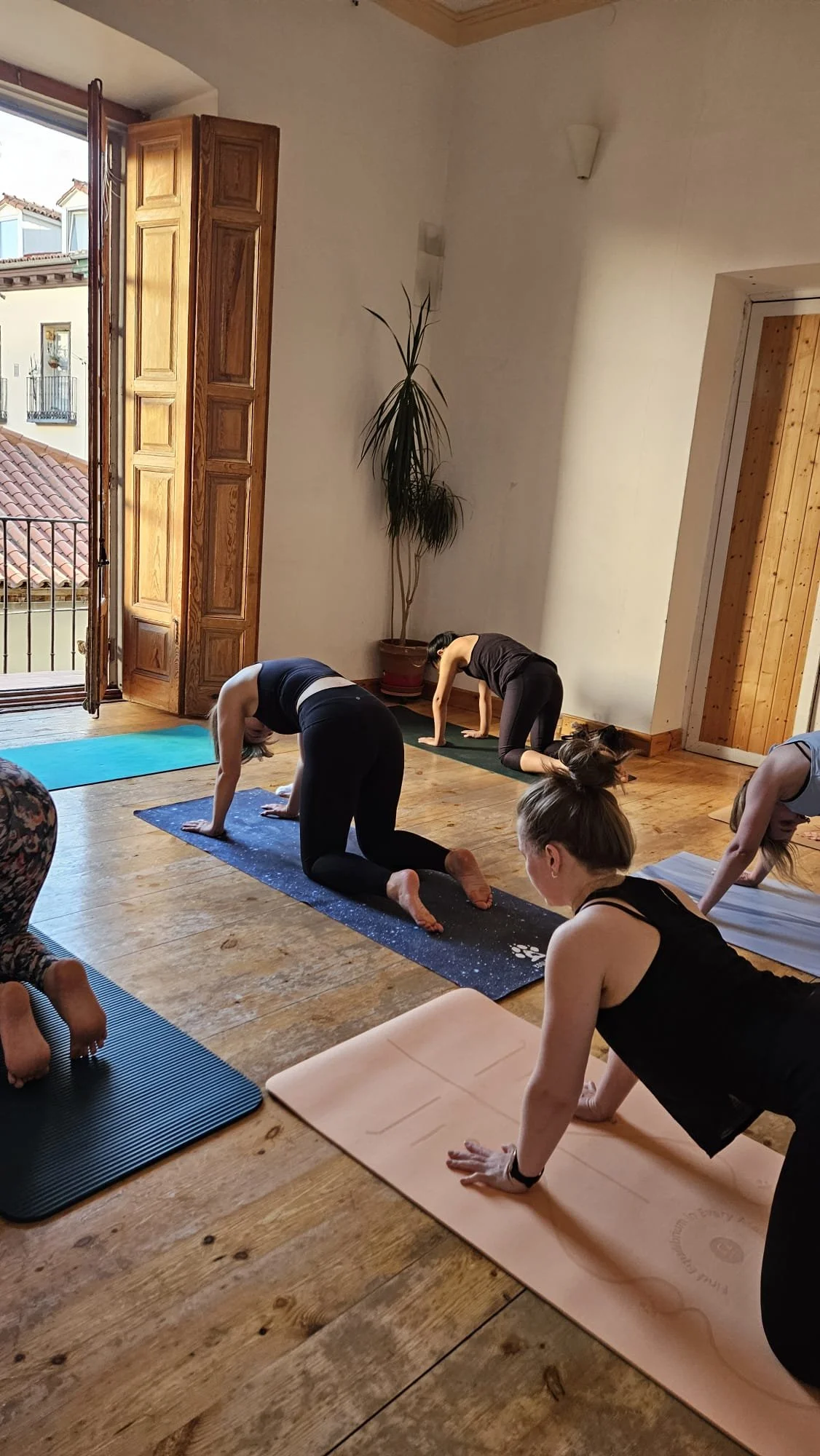
An English-speaking yoga class with Atiyasana in Madrid
How often should a beginner do yoga?
For many people, one or two yoga classes a week is a very good place to start.
That gives you enough regularity to become familiar with the movements, notice how different practices feel and gradually get more comfortable and easier.
If you have more time and genuinely enjoy practising more often, there's nothing wrong with doing more. But there's also no prize for going to the most classes.
A yoga practice doesn't have to take over your week to be useful.
Once a week
If once a week is what fits your life, it’s a great start.
You might not notice dramatic changes after one class, but over time you'll become more familiar with the practice. You may start recognising poses, noticing your breathing more easily and feeling more comfortable in class.
And sometimes, simply having one regular hour in your week that's yours can be valuable in itself.
Twice a week
For many people, two classes a week can be a nice balance.
You get enough repetition to build familiarity while still having plenty of time for everything else going on in your life.
You could also choose different styles depending on what you need.
For example, you might do a Hatha class one day and Slow Hatha & Yin another day. One practice can give you more movement and energy, while another gives you the chance to slow down and settle. Here is more information on choosing a style of yoga class.
Three or more times a week
If you love yoga and have the time, you might naturally want to practise more often.
That's completely fine too.
But more isn't automatically better. How your body feels, how much recovery you need and what else is happening in your life all matter.
And if you're doing several classes a week, they don't all need to be physically demanding. Your practice can include different styles and different levels of activity.
Do I need to practise yoga at home?
No - you don't need to have a full home practice to benefit from yoga.
For some people, getting to a class is what makes yoga happen. There's something about putting the time in your diary, leaving the house and practising with other people that makes it easier to be consistent.
But if you have the time and inclination, a few minutes of practice between classes can make a real difference.
It doesn't have to be another full yoga session. Even five minutes a few times during the week can help you stay familiar with the movements, notice how your body feels and keep some of the things you explored in class fresh in your mind.
You might repeat a few poses you worked on in class, spend a couple of minutes moving with your breath, or simply sit and breathe for a few minutes.
That little bit of continuity can mean that when you come back to class, you're not thinking, “Oh yes, yoga. I haven't done this for a whole week!” You already have some connection with the practice, so it can feel easier to pick up where you left off.
And you don't need to turn those five minutes into another thing to tick off your list. Think of it as keeping the thread going between classes.
If you eventually want to develop a longer home practice, great. But there's no need to start there.
What if I miss a week?
Nothing terrible happens.
You don't lose all your progress because you missed a class.
Life gets busy, or you go away on a trip, you get ill or work gets hectic or even sometimes you don't feel like going to yoga.
That's normal and fine.
The important thing is not to turn one missed class into “I've fallen off the wagon, so I might as well stop.”
You can just come back next week.
Yoga doesn't need to be an all-or-nothing activity.
What if I don't feel very flexible or fit?
You don't need to wait until you're more flexible, stronger or fitter before you start.
In fact, that's one of the reasons I think it's helpful to approach yoga as a practice rather than a performance. I’ve written more on the question of do I need to be flexible to start yoga.
Your body will be different from someone else's. It will also be different from how it was six months ago, or how it might be six months from now.
You can work with where you are.
That might mean using props, changing a pose, taking a rest or simply not going as far into a movement as someone next to you.
The aim isn't to make your body look like someone else's version of a yoga pose. In fact, may be looking for stress relief or a break from otherthinking.
What should I do if I'm completely new to yoga?
If you've never done yoga before, start with a class where you feel comfortable asking questions and where the teacher explains what you're doing.
You don't need to know the Sanskrit names of poses before you arrive, or be able to touch your toes or know what you're doing generally when you walk through the door.
Your first few classes are about getting familiar with the movements and you may feel that it feels new at first.
After a few classes, you'll probably start recognising some of the movements and understanding the rhythm of the class. That's when yoga can start to feel much more natural.
If you're wondering what actually happens when you turn up to your first class, I've written more about what to expect from your first yoga class in Madrid.
Finding a yoga routine that actually works for you
I think this is the part that gets missed when we talk about how often we should practise.
The best routine is one you can actually maintain.
If you have a busy job, a family, a packed social life or simply don't want yoga to become another thing to optimise, that's worth taking into consideration.
Maybe your ideal practice is a Sunday morning class every week.
Maybe it's two classes during the week.
Maybe you come regularly for a few months and then you need to drop to once a week for a while.
Your practice can change with you.
And you don't have to earn the benefits of yoga by doing more of it. Some kind of consistency is always good.
So, how often should you practise yoga?
One or two classes a week is a perfectly good place to start. And if you can add five minutes here and there between classes, even better.
The aim isn't to practise perfectly or every day. It's simply to find a rhythm that keeps you connected to the practice and fits into your real life.
From there, see how you feel.
If you want more, add more. If once a week works well for you, keep going. If you miss a week, do some at home and come back when you can.
What matters most is finding a practice that fits into your real life (rather than an ideal!) and a class where you enjoy being.
That's certainly what we try to create at Atiyasana: yoga that makes you feel good, without turning it into another thing you're supposed to be perfect at.
If you're looking for yoga classes in English in Madrid, you can find our current Hatha and Yin and classes here.