Yoga for Desk Workers in Madrid: Neck, Back and Hip Tightness
Long hours at a desk can leave your neck, back and hips feeling stiff. Find out how yoga can introduce more movement, build strength and help you step away from your screen.
If you spend most of your working day sitting at a desk, you might recognise the feeling of getting up at the end of the day with a stiff neck, tight shoulders, an uncomfortable lower back or hips that don't seem to want to move.
Whether you work remotely from your flat in Madrid, spend your days in an office or move between the two, long periods of sitting can leave you feeling as though your body has been in the same position for hours.
You might try stretching your neck between meetings or getting up to make another coffee but the stiffness often returns the next day.
Yoga can offer a different way to approach this. Rather than focusing on one tight muscle or trying to stretch everything out, a yoga practice gives you an opportunity to move your body in different ways, build strength, improve mobility and become more aware of how you're holding yourself.
And you don't need to be flexible or experienced to start.
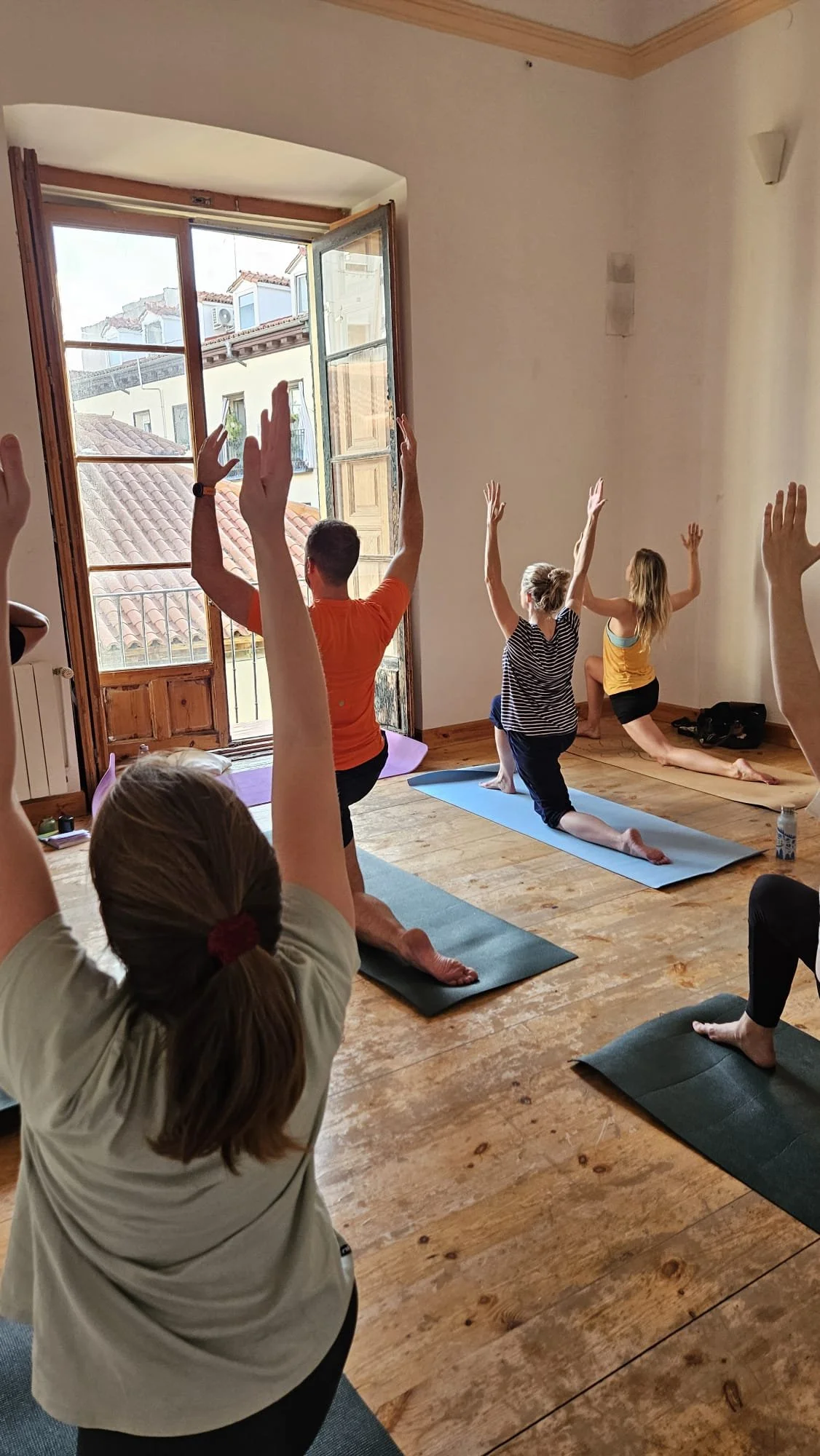
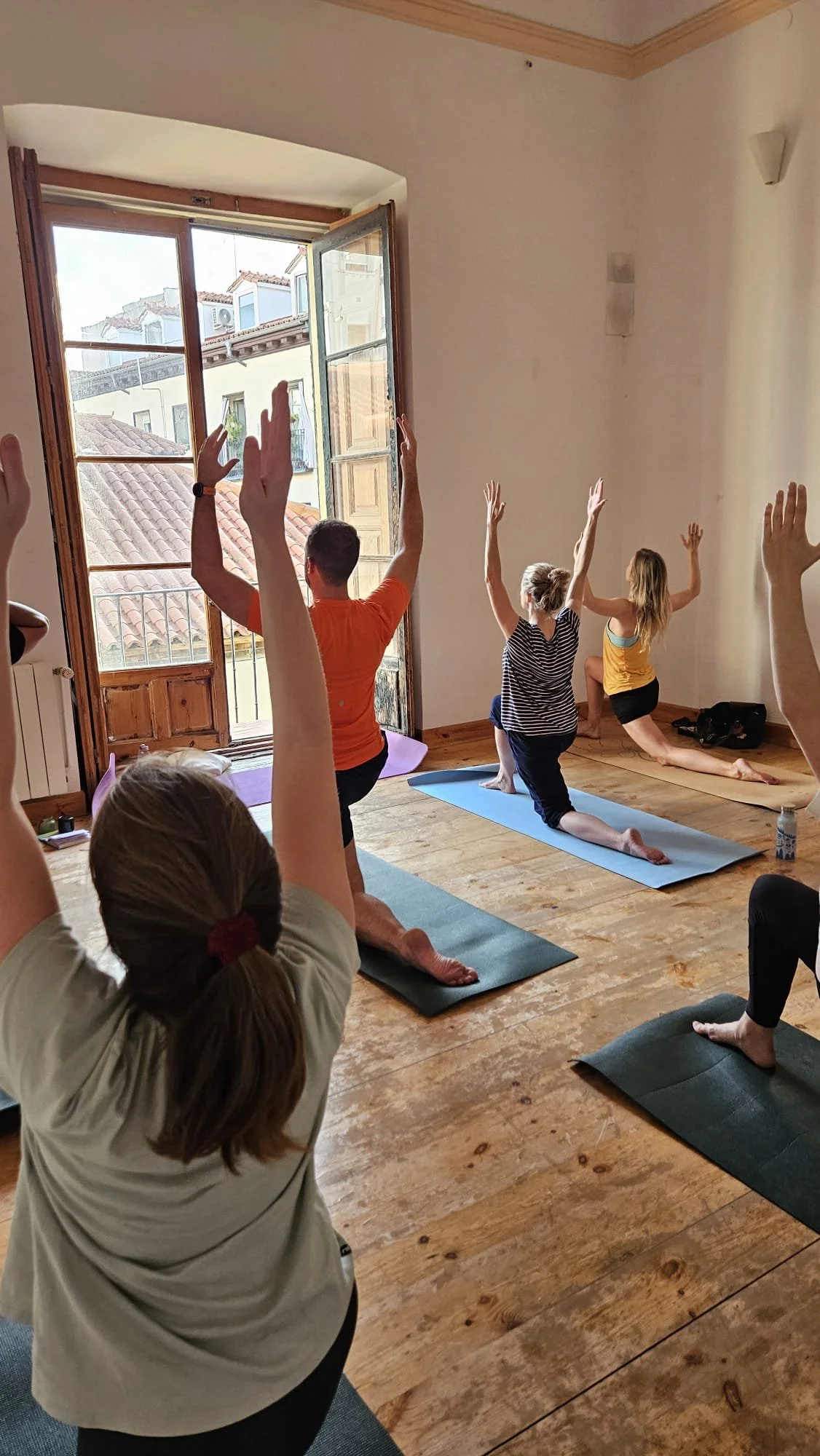
Low lunge is one of the first poses we reach for when your hips have been folded in a chair all day
Why sitting all day can leave you feeling stiff
Our bodies are designed to move. When we spend long periods sitting, we naturally spend less time changing position, moving our joints through their full range or using certain muscle groups.
Over time, this can contribute to feelings of stiffness and discomfort.
Some common areas people notice include:
Neck and shoulders
Looking at a screen for hours, particularly if your monitor isn't positioned comfortably, can encourage you to hold your head forward or keep your shoulders raised. Concentration and stress can also contribute to tension around the neck and upper back.
Lower back
Remaining in one position for a long time can make your lower back feel stiff or uncomfortable. Sitting isn't inherently bad for your back, but spending most of the day without changing position or moving can be unhelpful.
Hips
When you're sitting, your hips remain in a relatively flexed position. If you rarely move them into extension or explore different ranges of movement, they may begin to feel restricted.
Of course, not all discomfort comes from sitting, and persistent pain shouldn't automatically be attributed to your desk or posture. But if your working day involves very little movement, introducing more variety can be a useful place to start.
How yoga can help if you work at a desk
One of the things I like about yoga is that it doesn't focus on just one part of the body. A well-rounded practice explores how different areas move and work together.
Here are three ways yoga can complement a desk-based routine.
1. Moving beyond your usual positions
During a working day, we tend to repeat a fairly limited range of movements. We sit, reach for a keyboard, look at a screen and perhaps walk to the kitchen or commute home.
Yoga introduces different ways of moving.
You might explore spinal flexion and extension, gentle twists, side bends and movements that take your hips through a wider range. Rather than simply stretching the area that feels tight, you're giving your body the opportunity to move in ways that may be missing from your usual routine.
This variety can help you develop greater mobility and awareness of how your body feels.
2. Building strength as well as flexibility
When people think about yoga, they often think about stretching. But yoga isn't just about becoming more flexible (or even just about the body).
Practices such as Hatha yoga include standing postures, balancing, weight-bearing movements and sequences that ask you to support your own body weight.
These movements can help develop strength, stability and body awareness alongside mobility.
For someone who spends much of the day sitting, having opportunities to stand, balance, move and support your body in different ways can be a valuable addition to the week.
3. Taking a break from mental as well as physical activity
Desk-based work isn't always physically demanding, but it can be mentally tiring.
You might spend hours switching between emails, meetings, deadlines and different tasks. Even when you finish work, your attention can remain caught up in what you've been doing or what you need to do next.
Yoga gives you a different focus. Paying attention to movement and breathing can help you step out of that constant stream of activity for a while.
This isn't about forcing yourself to stop thinking or expecting to leave every class feeling completely relaxed. It's about giving your attention something different to work with.
If stress and overthinking are familiar experiences, you might also enjoy reading Can Yoga Help with Stress and Overthinking?.
A few ways to bring more movement into your working day
You don't have to wait until your next yoga class to start changing how much you move.
A few simple habits can help break up long periods of sitting:
Change position regularly: Stand up, walk around or shift your position rather than staying in the same posture for hours.
Take short movement breaks: A few minutes away from your screen can give your eyes and body a change of focus.
Move in different directions: Try reaching your arms overhead, turning your upper body comfortably or taking a short walk.
Notice your shoulders and jaw: When concentrating, many of us unconsciously tense these areas. Simply noticing can help you release unnecessary effort.
Make movement part of your routine: A walk at lunchtime, a regular yoga class or another activity you enjoy can make it easier to build movement into your week.
These small changes don't need to become another productivity target. The aim isn't to optimise every minute of your day, but to give your body more opportunities to move.
What kind of yoga is best for desk workers?
There isn't one style of yoga that's right for everyone who works at a desk. It depends on what you're looking for, how you feel physically and what you enjoy.
A Hatha class can offer a combination of standing postures, strength, balance and mobility. It's a good way to explore different movements at a considered pace.
Slow Hatha & Yin brings together more active movement with longer-held, supported postures. This offers a contrast between building strength and exploring a more settled approach to movement.
Yin yoga focuses on longer-held postures that are seated or lying. It can be an interesting way to explore sensation and spend time with areas that feel restricted, although it isn't a treatment for back, neck or hip pain.
If you're not sure which style to choose, I've written more about the differences in Hatha, Yin or Meditation: Which Yoga Class Is Right for You?.
And if you're new to yoga altogether, you might find this article useful: How Often Should You Practise Yoga as a Beginner?.
You don't need to build up a certain level of flexibility or fitness before joining a class. A good starting point is simply choosing a class that feels appropriate for you and letting your practice develop over time.
Try an evening yoga class in central Madrid
If you've spent most of the day sitting at a desk, an evening yoga class can be a useful way to bring some movement into your week before heading home.
At Atiyasana Yoga Social, we teach yoga in English in central Madrid, with classes designed to combine movement, strength, mobility and time to focus on how you're feeling.
Our Wednesday evening Slow Hatha & Yin class brings together more active movement and longer-held postures, offering a balance between the two. On the first Wednesday of the month, the session is a full 60-minute Yin class.
Classes are open to different levels of experience, including people who are relatively new to yoga.
If you're based in Madrid and spend much of your working day at a desk, come and join us on a Wednesday evening.
You don't need to touch your toes or arrive knowing all the poses. Just come as you are.