Why I Include Yoga Philosophy in My Classes
Have you ever been to a yoga class where the teacher mentioned something called Ahimsa, Santosha or Aparigraha and wondered what on earth they were talking about?
If so, you're not alone.
When people first come to yoga, they usually expect movement, stretching and perhaps a little relaxation at the end.
They don't always expect to leave thinking about kindness, contentment or letting go.
Yet these concepts are one of the reasons I really started to love yoga.
While yoga postures (known as asana) are an important part of the practice, they're only one piece of a much bigger picture.
Yoga isn't about touching your toes or holding a balance. It's about learning practical tools that help us navigate everyday life with a little more awareness, balance and compassion.
That's why I often include a short theme from yoga philosophy at the beginning and at points in the class.
Not because I want to give a lecture. These concepts have a remarkable way of becoming relevant long after we've finished class.
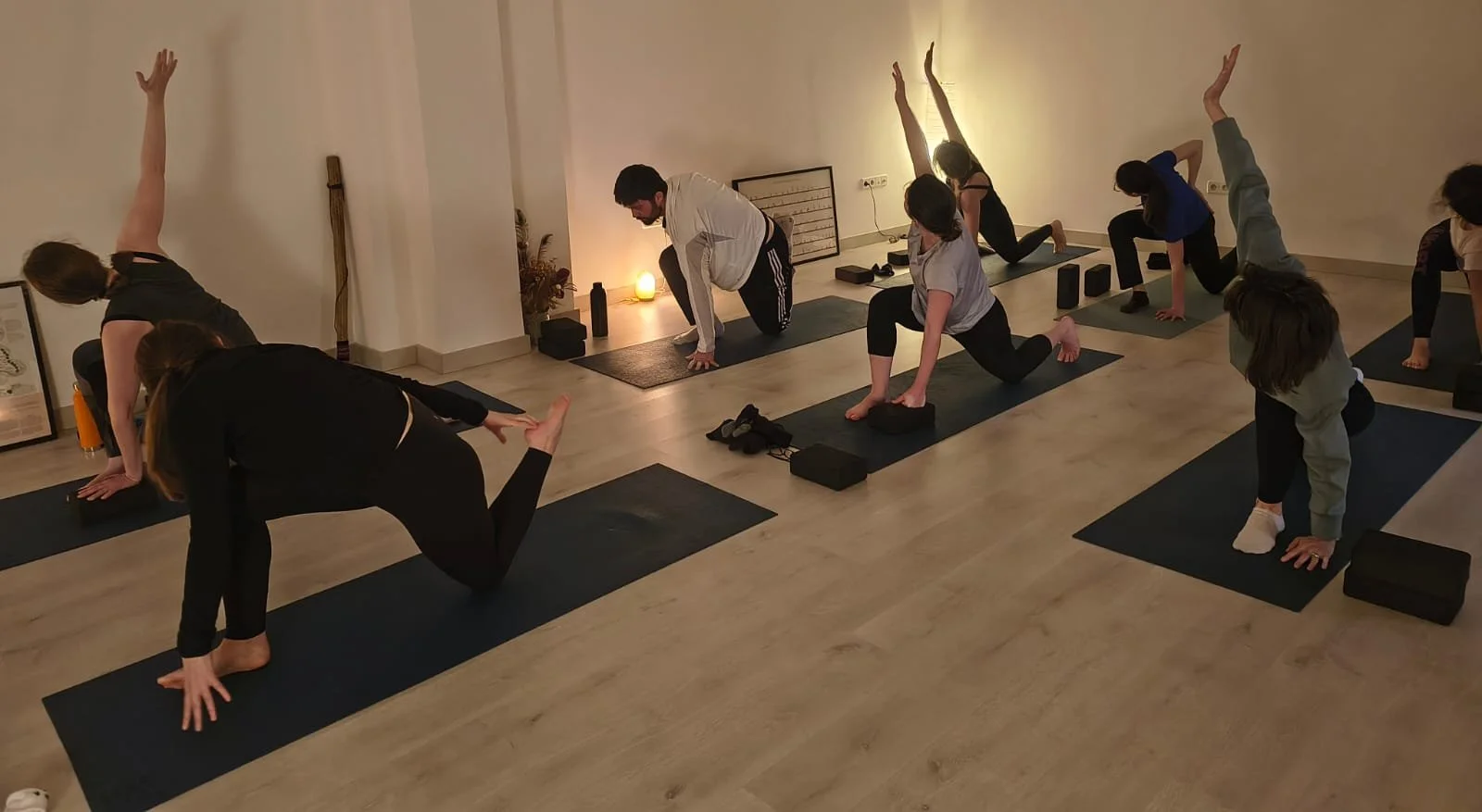
Yoga Class in Madrid
Isn't Yoga Just Physical Exercise?
This is probably one of the biggest misconceptions about yoga.
Many people first discover yoga because they want to improve flexibility, build strength, ease back pain or help with anxiety. Learn more about how yoga can help with stress and overthinking.
Those are wonderful reasons to begin.
Traditionally though, yoga has always been about much more than the physical practice.
The postures help us become stronger and more mobile, but they also teach us how we respond to challenge.
Whether we force, compare ourselves with others, if we can we breathe when something feels uncomfortable etc.
These observations matter far more than whether our hands reach the floor.
What Is Yoga Philosophy?
Don't worry - you won't need to memorise Sanskrit words or study ancient texts before coming to class.
Yoga philosophy is simply a collection of ideas that encourage us to live with greater awareness.
Many of the themes we explore are very practical.
For example:
Ahimsa (non-harming) reminds us to be kind. Not only to other people, but also to ourselves.
Sometimes that means choosing to rest instead of constantly pushing harder.
Santosha (contentment) invites us to appreciate where we are today instead of always believing happiness lives in the next thing or achievement.
Aparigraha (letting go) encourages us to release things that no longer helps us, whether that's perfectionism, comparison or expectations we place on ourselves.
These aren't rules.
They're invitations to reflect.
Philosophy Doesn't Stay In Class
One of my favourite things is hearing students tell me they remembered a class theme during the week.
Perhaps they noticed themselves being kinder after making a mistake, or caught themselves comparing their progress with someone else, or remembered to pause before reacting in a stressful situation.
These are often the moments that stay with us longest.
Not because we've mastered a difficult pose but because we've approached everyday situations a little differently.
There Are No Right Answers
Something I love about yoga philosophy is that it isn't about being perfect.
Nobody practises Ahimsa perfectly or feels content every day.
We're all learning.
The philosophy gives us another way of looking at everyday life.
Sometimes the answer changes depending on what we’re doing, what our priorities at that time are and that is perfectly fine.
What This Looks Like in My Classes
If you come to one of my classes, you'll usually hear a short reflection at the beginning, often once we start moving.
It might be talking about a theme such as balance, patience or compassion or asking a question.
The philosophy isn't separate from the yoga.
It's woven into it.
Sometimes the movement helps us understand the idea.
Sometimes the idea helps us approach the movement differently.
You don't need any previous experience, and you're never expected to agree with every reflection. You don’t need to be flexible either.
They're simply invitations to listen and feel what resonates for you.
More Than an Hour in Class
For me, the best yoga classes don't finish when Savasana ends.
They continue in the conversations we have afterwards over coffee.
In the way we treat ourselves during a difficult week.
In the moments we choose presence over perfection.
That's what I hope people take away from my classes.
Not just stronger bodies, but practical tools they can carry into everyday life.
Yoga Classes in Madrid
If you're looking for yoga classes in Madrid, we teach Hatha Yoga, Yin Yoga and Meditation in English at Atiyasana, both in studios across central Madrid and outdoors in Retiro Park during the warmer months.
Classes are welcoming, beginner-friendly and designed for real life. Alongside the movement, we explore simple ideas from yoga philosophy that encourage us to slow down, reflect and connect with ourselves and with others. Learn more about what to expect in your first class in Madrid.
Many students also stay for coffee after class, and throughout the year we organise picnics, brunches and social events, making it a wonderful way to meet like-minded people and build community in Madrid.
If you're curious about trying a class, you're always very welcome.