How Often Should You Practise Yoga as a Beginner?
New to yoga and wondering how often you should practise? Find out how many classes a week you really need and how to build a yoga practice that fits into your actual life.
If you're new to yoga, one of the first questions you might have is: how often should I actually practise?
You might have seen people doing yoga every morning, joining five classes a week or talking about having a daily practice. And if you're starting from scratch, that can make yoga feel like another thing you're supposed to fit into an already busy life.
The good news is that you don't need to practise every day to get something from yoga.
For most beginners, the more useful question isn't “How much yoga should I be doing?” but “What kind of practice can I realistically keep coming back to?”
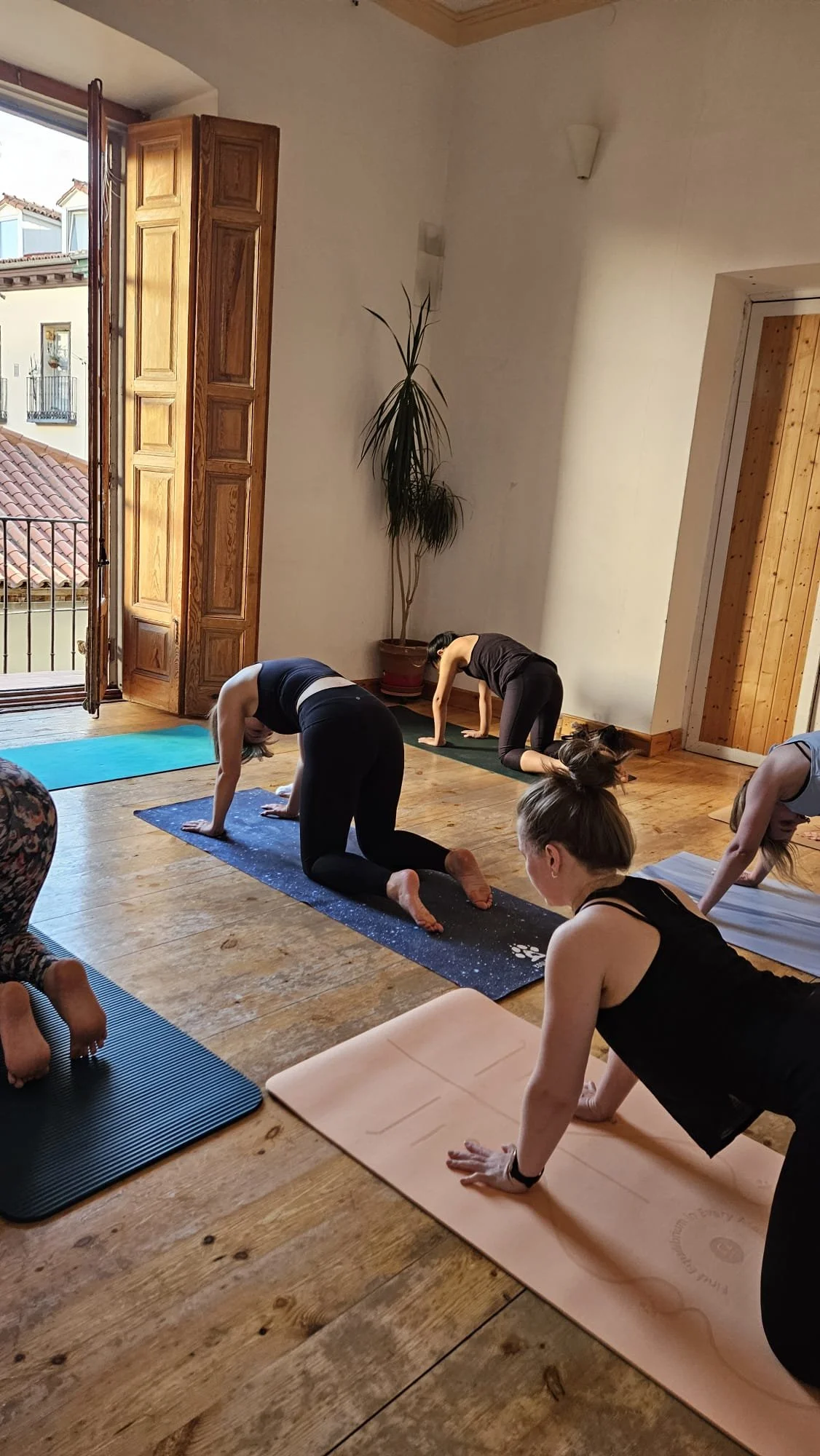
An English-speaking yoga class with Atiyasana in Madrid
How often should a beginner do yoga?
For many people, one or two yoga classes a week is a very good place to start.
That gives you enough regularity to become familiar with the movements, notice how different practices feel and gradually get more comfortable and easier.
If you have more time and genuinely enjoy practising more often, there's nothing wrong with doing more. But there's also no prize for going to the most classes.
A yoga practice doesn't have to take over your week to be useful.
Once a week
If once a week is what fits your life, it’s a great start.
You might not notice dramatic changes after one class, but over time you'll become more familiar with the practice. You may start recognising poses, noticing your breathing more easily and feeling more comfortable in class.
And sometimes, simply having one regular hour in your week that's yours can be valuable in itself.
Twice a week
For many people, two classes a week can be a nice balance.
You get enough repetition to build familiarity while still having plenty of time for everything else going on in your life.
You could also choose different styles depending on what you need.
For example, you might do a Hatha class one day and Slow Hatha & Yin another day. One practice can give you more movement and energy, while another gives you the chance to slow down and settle. Here is more information on choosing a style of yoga class.
Three or more times a week
If you love yoga and have the time, you might naturally want to practise more often.
That's completely fine too.
But more isn't automatically better. How your body feels, how much recovery you need and what else is happening in your life all matter.
And if you're doing several classes a week, they don't all need to be physically demanding. Your practice can include different styles and different levels of activity.
Do I need to practise yoga at home?
No - you don't need to have a full home practice to benefit from yoga.
For some people, getting to a class is what makes yoga happen. There's something about putting the time in your diary, leaving the house and practising with other people that makes it easier to be consistent.
But if you have the time and inclination, a few minutes of practice between classes can make a real difference.
It doesn't have to be another full yoga session. Even five minutes a few times during the week can help you stay familiar with the movements, notice how your body feels and keep some of the things you explored in class fresh in your mind.
You might repeat a few poses you worked on in class, spend a couple of minutes moving with your breath, or simply sit and breathe for a few minutes.
That little bit of continuity can mean that when you come back to class, you're not thinking, “Oh yes, yoga. I haven't done this for a whole week!” You already have some connection with the practice, so it can feel easier to pick up where you left off.
And you don't need to turn those five minutes into another thing to tick off your list. Think of it as keeping the thread going between classes.
If you eventually want to develop a longer home practice, great. But there's no need to start there.
What if I miss a week?
Nothing terrible happens.
You don't lose all your progress because you missed a class.
Life gets busy, or you go away on a trip, you get ill or work gets hectic or even sometimes you don't feel like going to yoga.
That's normal and fine.
The important thing is not to turn one missed class into “I've fallen off the wagon, so I might as well stop.”
You can just come back next week.
Yoga doesn't need to be an all-or-nothing activity.
What if I don't feel very flexible or fit?
You don't need to wait until you're more flexible, stronger or fitter before you start.
In fact, that's one of the reasons I think it's helpful to approach yoga as a practice rather than a performance. I’ve written more on the question of do I need to be flexible to start yoga.
Your body will be different from someone else's. It will also be different from how it was six months ago, or how it might be six months from now.
You can work with where you are.
That might mean using props, changing a pose, taking a rest or simply not going as far into a movement as someone next to you.
The aim isn't to make your body look like someone else's version of a yoga pose. In fact, may be looking for stress relief or a break from otherthinking.
What should I do if I'm completely new to yoga?
If you've never done yoga before, start with a class where you feel comfortable asking questions and where the teacher explains what you're doing.
You don't need to know the Sanskrit names of poses before you arrive, or be able to touch your toes or know what you're doing generally when you walk through the door.
Your first few classes are about getting familiar with the movements and you may feel that it feels new at first.
After a few classes, you'll probably start recognising some of the movements and understanding the rhythm of the class. That's when yoga can start to feel much more natural.
If you're wondering what actually happens when you turn up to your first class, I've written more about what to expect from your first yoga class in Madrid.
Finding a yoga routine that actually works for you
I think this is the part that gets missed when we talk about how often we should practise.
The best routine is one you can actually maintain.
If you have a busy job, a family, a packed social life or simply don't want yoga to become another thing to optimise, that's worth taking into consideration.
Maybe your ideal practice is a Sunday morning class every week.
Maybe it's two classes during the week.
Maybe you come regularly for a few months and then you need to drop to once a week for a while.
Your practice can change with you.
And you don't have to earn the benefits of yoga by doing more of it. Some kind of consistency is always good.
So, how often should you practise yoga?
One or two classes a week is a perfectly good place to start. And if you can add five minutes here and there between classes, even better.
The aim isn't to practise perfectly or every day. It's simply to find a rhythm that keeps you connected to the practice and fits into your real life.
From there, see how you feel.
If you want more, add more. If once a week works well for you, keep going. If you miss a week, do some at home and come back when you can.
What matters most is finding a practice that fits into your real life (rather than an ideal!) and a class where you enjoy being.
That's certainly what we try to create at Atiyasana: yoga that makes you feel good, without turning it into another thing you're supposed to be perfect at.
If you're looking for yoga classes in English in Madrid, you can find our current Hatha and Yin and classes here.
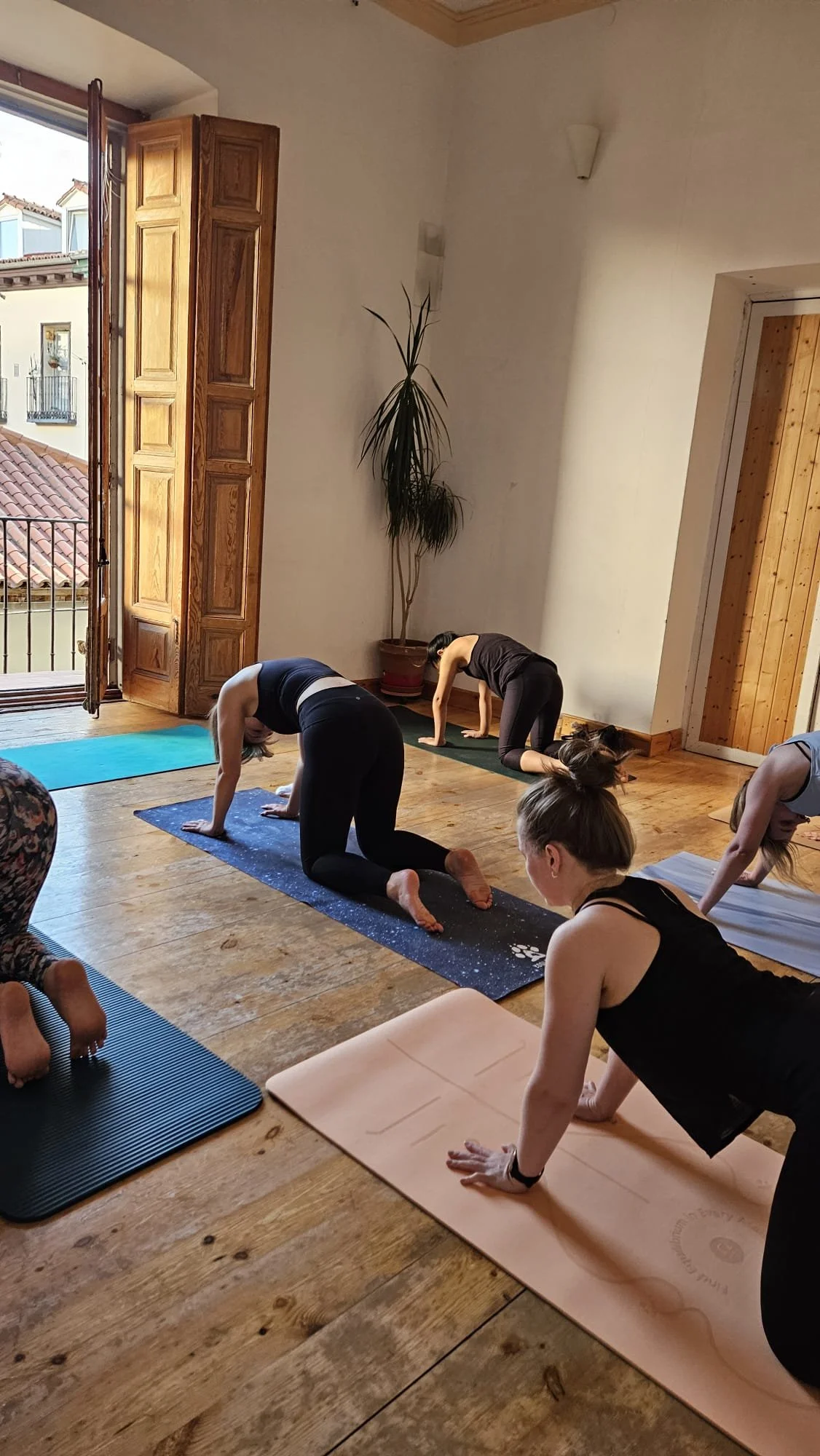
New to Madrid? How to Find a Yoga Community in English
New to Madrid? Finding your people can take time. Discover how an English-speaking yoga community can help you meet people, practise yoga and feel more at home in the city.
Moving to Madrid can be exciting.
The city, sunshine, food, parks, late dinners, the feeling that there's always somewhere new to explore...
But once the initial excitement wears off, there can be another side to starting a life in a new city.
How do you actually meet people?
Making friends as an adult isn't always easy, particularly when you're new to a city and don't yet have a network around you.
And if you're an international resident, there's another question:
Where can I find people I can communicate with comfortably in English?
One of the things I've loved seeing through Atiyasana is how yoga can become a good way to build that sense of connection.
You come for the yoga: we are soon opening our own studio home near Ópera, Madrid.
You start recognising familiar faces.
You stay for coffee.
And you start to feel like you belong.
An English-speaking yoga class in Madrid with Atiyasana, bringing together an international community to practise yoga and connect
Why community matters when you're new to Madrid
When you first move somewhere, it's easy to spend your time ticking things off a list.
Visit this neighbourhood.
Try that restaurant.
See the museum.
Find your favourite café.
All of those things are part of getting to know Madrid, but building a life here takes more than knowing where the best places are.
It takes people.
Having somewhere you go regularly can make a huge difference.
You start seeing the same faces each week. You have conversations that continue from one week to the next. You begin to recognise people outside the original activity.
That regularity is one of the things I think makes a community different from simply attending an event.
Why yoga can be a good way to meet people
You don't necessarily have to go to yoga because you're looking for new friends.
That's actually part of what makes it work.
You have a shared reason for being there.
You're practising together for an hour, perhaps trying something new, laughing when you wobble out of a balance and then relaxing together at the end.
You don't have to walk into a room and immediately start making conversation with strangers.
The connection develops naturally.
And because yoga classes happen regularly, you have the opportunity to see people again.
That's often how friendships begin.
Finding yoga classes in English in Madrid
If English is your first language, or a language in which you feel comfortable, finding an English-speaking yoga class can make a difference.
It's not just about understanding instructions.
It's about being able to relax into the experience without having to concentrate on translating what's being said.
It also makes it easier to chat before or after class, ask questions and get to know the people around you.
I've written more about this in Why Practicing Yoga in English in Madrid Makes a Difference When Living Abroad.
But an English-speaking class doesn't have to mean a room full of people from the same country.
Madrid is an international city, and one of the lovely things about an English-speaking community is meeting people from lots of different backgrounds.
Look for somewhere you'll actually want to return to
When you're looking for a yoga community in Madrid, I'd consider more than just the timetable or price.
Ask yourself:
Do I feel comfortable here?
Can I imagine coming back next week?
Does the teacher make beginners feel welcome?
Is there an opportunity to connect with other people?
Does the style of yoga suit what I actually need?
A beautiful studio isn't necessarily the right community for you.
And the most advanced class isn't necessarily the most beneficial.
The right place is somewhere you feel comfortable enough to keep showing up.
If you're completely new to yoga, you might also find my guide to what to expect in your first yoga class in Madrid helpful.
Yoga doesn't have to be your whole social life
I don't think a yoga community needs to become your entire social circle.
It's simply one way of creating regular connection.
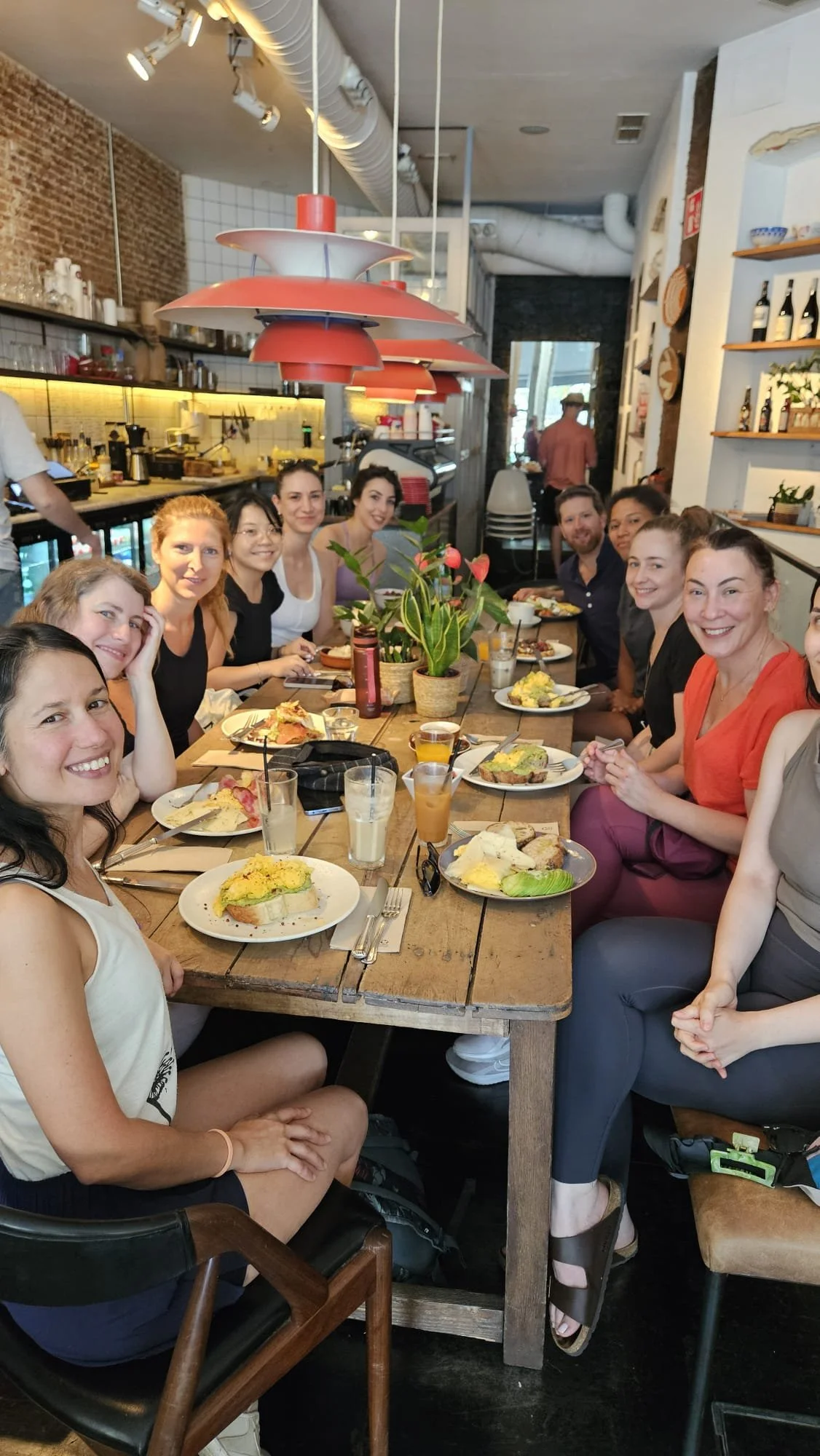
At Atiyasana, we often go for coffee after Sunday classes, and we've had picnics, brunches and other social meet-ups.
Sometimes people come to yoga class and quite often they stay for coffee/the social side.
That's part of what I wanted to create: somewhere that makes it easier to meet people without the pressure of a formal networking event or organised social.
And what about the yoga itself?
Of course, the yoga class still matters.
Different people are looking for different things.
You might enjoy a more active Hatha practice.
You might prefer the slower pace of Yin.
Or perhaps meditation is what you need when your mind feels particularly busy.
If you're not sure which one is right for you, I've put together guides on Hatha Yoga, Yin Yoga or Meditation? How to Choose the Right Yoga Class in Madrid and more on Yin Yoga here.
And you definitely don't need to arrive flexible, experienced or particularly "good" at yoga.
You just need to arrive as you are.
A new chapter for Atiyasana
Atiyasana started with the idea that yoga is about more than an hour on a mat.
It's about how we feel in our bodies, how we relate to ourselves and how we connect with other people.
And now we’re working towards creating a permanent home for that community.
Atiyasana Yoga Social's new studio in central Madrid is planned to open in the coming months.
You can find out more about the studio near Ópera, Madrid and join our waitlist here.
Our aim is to create a welcoming space where you can practise yoga in English, meet people and feel part of something - not a place where you need to be flexible, experienced or particularly "yoga-y" to belong.
Until then, we continue to meet for weekly classes in central Madrid and in Retiro Park during the warmer months.
You can find our current yoga classes in Madrid here.
New to Madrid? Start exploring
Of course, yoga is only one part of discovering a new city.
If you're looking for places to walk, relax and look after yourself while getting to know Madrid, I've also put together a free Madrid Mind & Body Wellness Guide.
It includes some of my favourite places and ideas for enjoying the city in a way that supports your wellbeing - from Retiro Park to food markets, hot chocolate and other places to slow down and enjoy Madrid.
Get your free guide :
And if you're looking for somewhere to practise yoga and meet people along the way, we hope you will join us at Atiyasana.
You don't have to know anyone when you arrive and you will be warmly welcomed.
Beyond the Mat: How Retiro Park Yoga is Building Madrid’s Warmest Expat Community
Moving to Madrid is an incredible adventure, filled with sun-drenched afternoons, coffees outdoors and the thrill of a new culture. But let’s be honest for a moment: it can also be incredibly lonely. Navigating a new city, trying to build a social circle from scratch, and dealing with a language barrier can leave us feeling untethered.
When you are craving genuine connection, loud networking events or crowded bars often feel forced or overwhelming. What if the easiest way to find your people in Spain wasn't at a drinks event, but on a yoga mat under the shade of the trees?
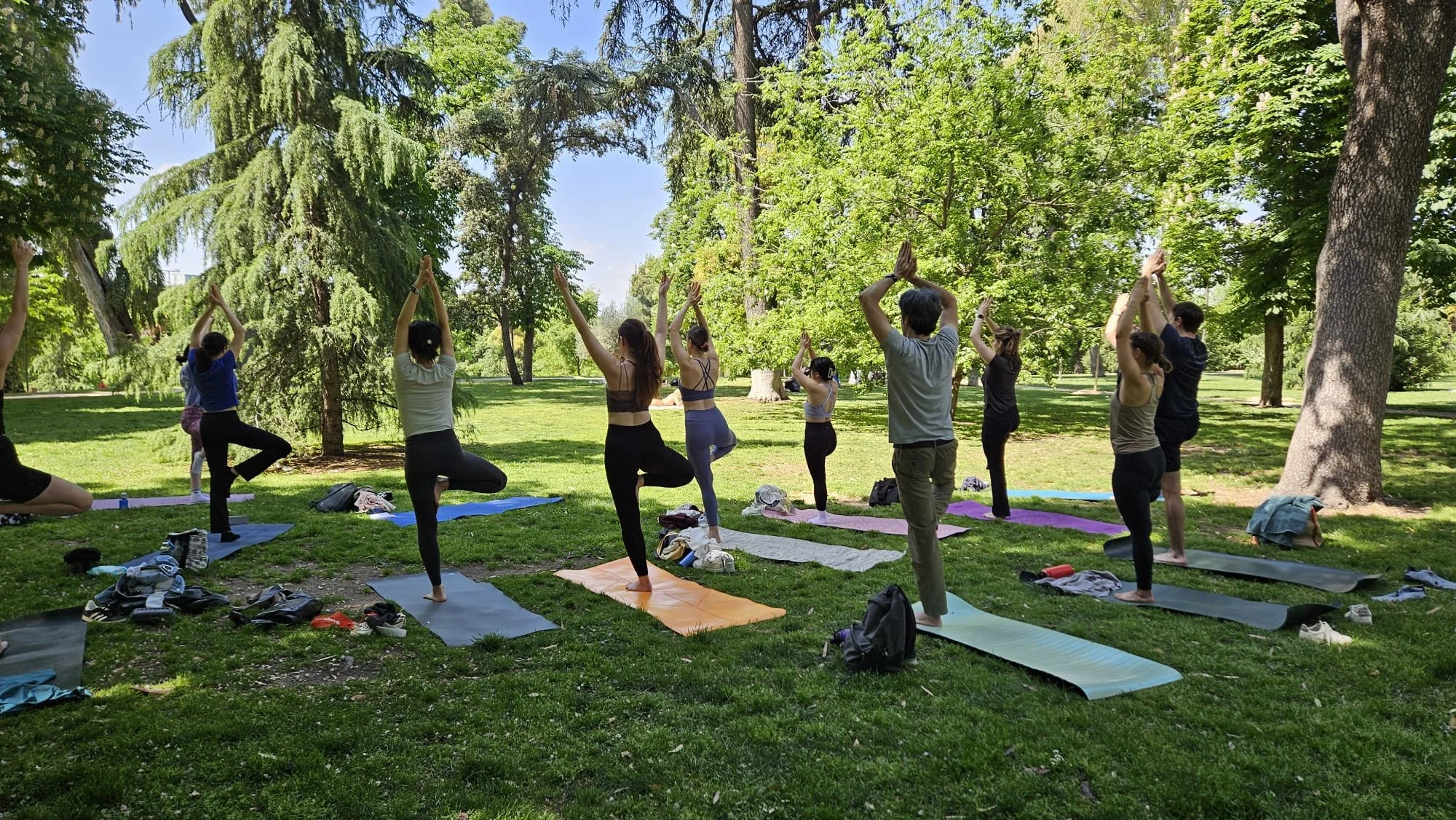
You don't have to navigate life in Madrid alone. Our outdoor yoga and social sessions run weekly in Retiro Park when the weather is good (usually in April, May, June, September and early October).
Classes are taught in English, open to all levels and designed to help you ground and connect.
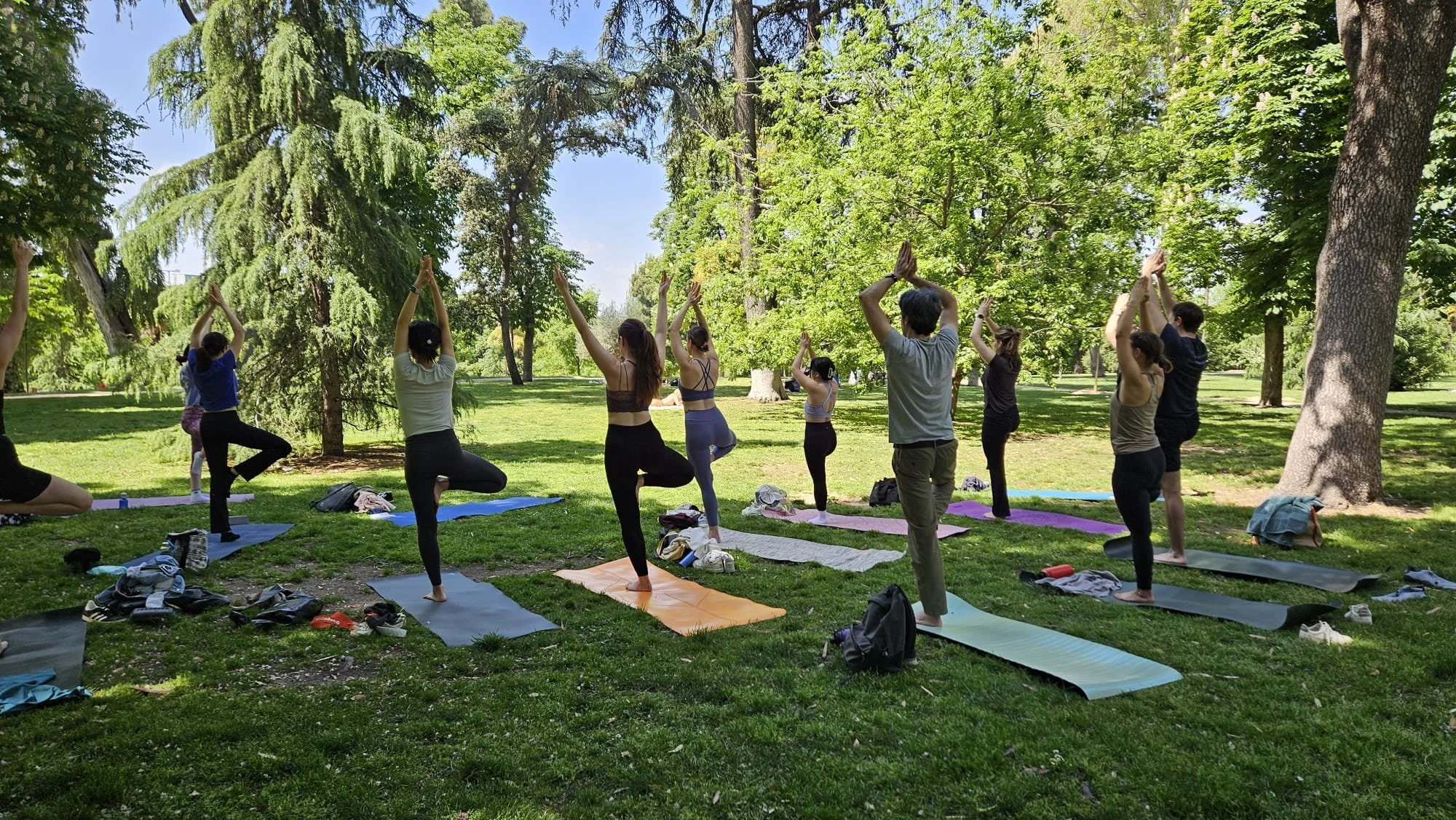
Yoga in English in Retiro Park
The Science of Moving and Breathing Together
There is a unique magic that happens when we practice yoga in a group. In psychology, there is a concept known as "collective effervescence": the synchronized energy and sense of belonging we feel when we move and breathe in unison with other humans.
When you practice solo at home, you get the physical benefits of yoga. But when you practice in a group, your nervous system co-regulates with the people around you. Your social defenses naturally drop, stress hormones decrease, and a shared sense of safety takes over. By the time Savasana ends, you aren't just relaxed - you feel connected to the collective energy of the space.
You can learn more about the differences between Hatha Yoga, yin yoga and meditation in our guide.
Why the Park Lowers Our Barriers
Studio walls can sometimes feel formal or intimidating, especially if you are new to yoga or new to a city. Moving our practice outside into the heart of Retiro Park changes everything.
Under the trees, surrounded by nature, the pressure evaporates. The casual environment of the park plus the friendly group makes it natural to strike up a conversation while rolling up your mat. You aren’t rushing out the door to catch a metro as you are already in the most beautiful backyard in Madrid, perfectly positioned to slow down and chat.
It’s Never Just About the Yoga
At Atiyasana, the yoga posture sequence is only one part of the experience. The magic continues after we close.
Our weekly sessions are built around community. Nearly every week our classes naturally transition into casual park picnics, coffee chats or weekend plans. We have watched beautiful friendships and travel plans form right here in our group. This isn't just an outdoor class; it’s a weekly sanctuary where you can speak a language you feel comfortable in, share your expat highs and lows, and feel completely understood.
Here’s more on what to expect from your first yoga class.
Ready to Find Your People in Madrid?
Don’t spend another weekend scrolling through meetup groups wondering how to connect. Sign up for class, breathe the fresh park air, and meet a warm, welcoming community of global minds who understand exactly what it’s like to build a life abroad.
If you're new to Madrid, you might also find my guide to finding a yoga community in English useful.
PS if you don’t have a mat you can bring a towel or please message us in advance and we can bring you a spare.
And if you do prefer classes indoors, you can join us our indoor classes and at our dedicated studio space in Ópera when we open.
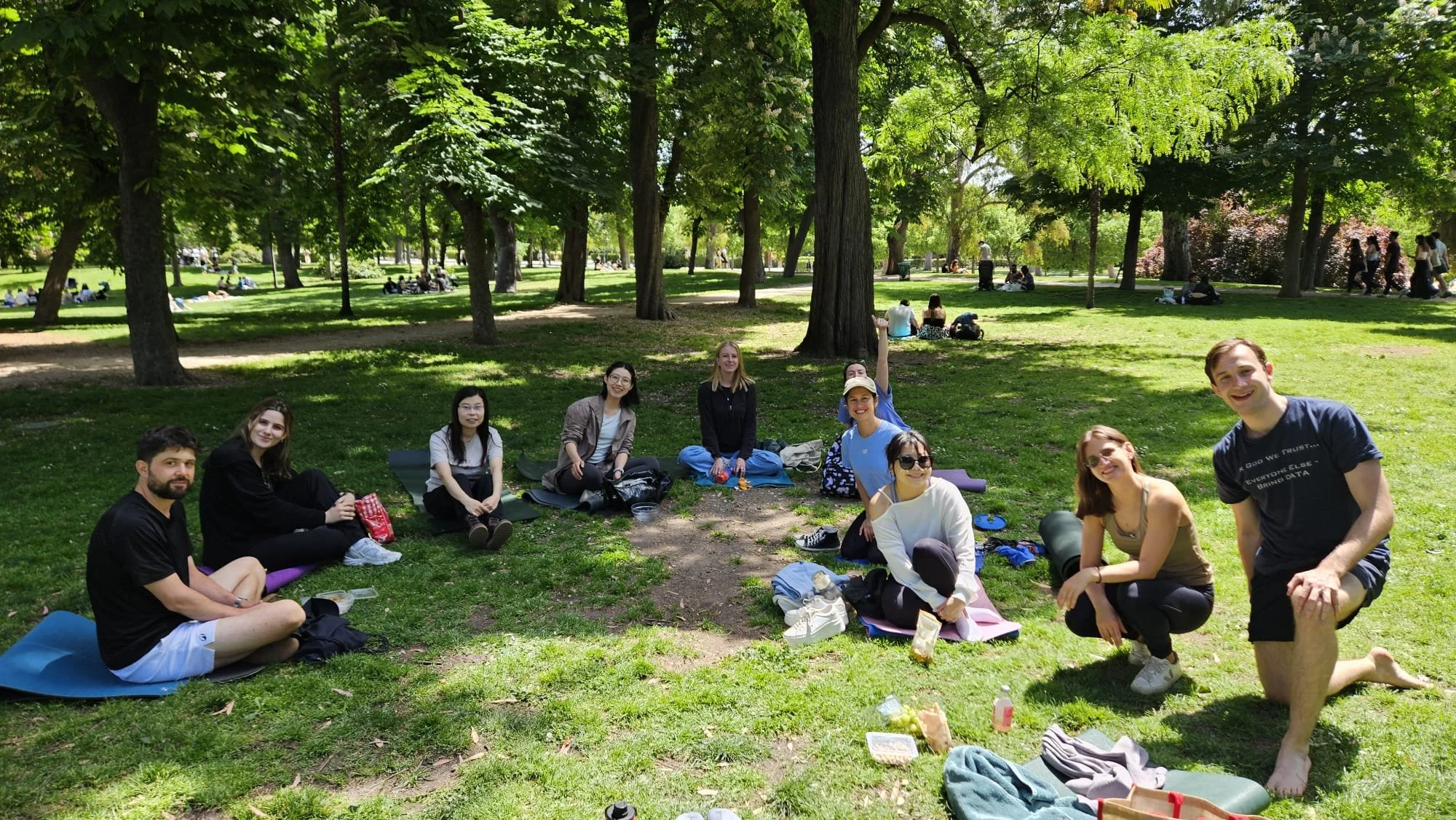
Wellness Communities for Expats in Madrid: How to Build a Life You Love
Social after yoga in Retiro Park
Moving to Madrid is exciting! Although navigating bureaucracy, adjusting to a new pace of life and building a social circle from scratch can also feel quite overwhelming especially in those first months while you are still finding your way around.
The good news is that Madrid has a genuinely brilliant ecosystem of expat communities across wellness, nature, language and connection. You don't have to build everything from zero. You just need to know where to look.
Here are five communities run by real people, mostly free or low-cost that can help you feel at home faster.
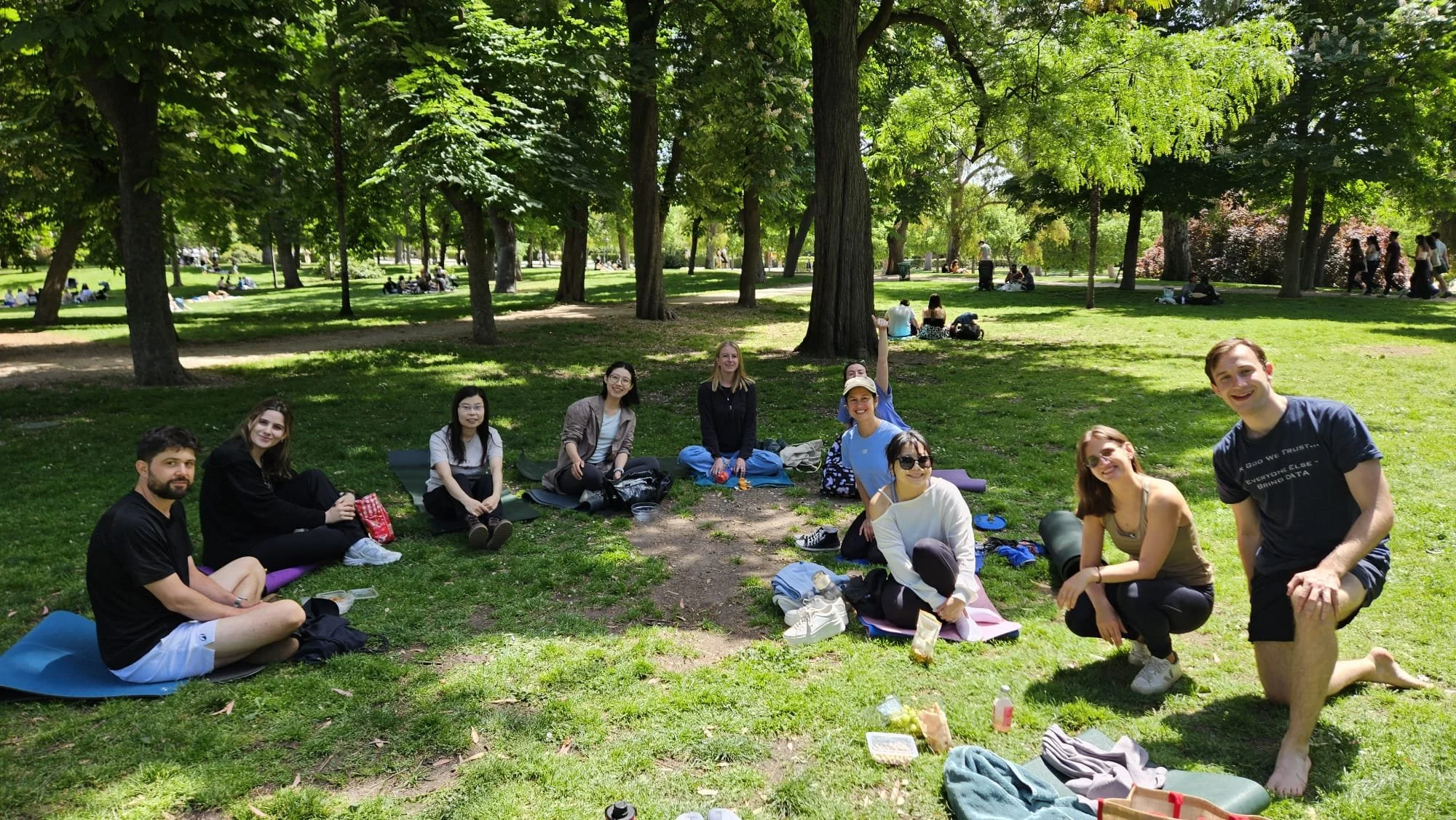
Social after yoga in Retiro Park
Yoga Social Madrid: English-Speaking Yoga in the Park & Studio
If wellness is part of how you take care of yourself, starting with a yoga practice is one of the best things you can do when you move somewhere new. It gives you a routine, a physical outlet, and, when you find the right community, a real sense of belonging.
At Atiyasana, we run Yoga Social Madrid, offering yoga classes in English in Madrid: both outdoors in Retiro Park and in the studio, depending on the season. I set up this group in 2019 soon after moving to Madrid, having taught yoga for 8 years in the UK. I wanted to continue teaching yoga and wanted to create a community spirit being at that time new myself. It has now grown to over 2300 members on Meet up and I’m happy to see it as a thriving community in Madrid.
Our groups are friendly, which means you actually get to know the people you practise with rather than just being another face in a crowded class. We tend to attract interesting, wellness-minded internationals who are building a life here, which makes our community a natural social hub. We go for coffees, brunches and picnic after Sunday class so people get to know each other, and many make friends. We speak a mix of languages and the yoga classes are in English. There are so many benefits to practicing in a language you feel comfortable in here.
Beyond weekly classes, we also run retreats near Madrid and mentor yoga teachers. Our aim is to create a space that feels welcoming and nourishing - not intimidating, not trendy, just good yoga with good people.
Find out more about our classes here.
La Cordobesa: Free English/Spanish Language Exchange
One of the things expats can underestimate is how much speaking Spanish, even badly, changes your experience of living here. It opens doors, builds confidence and makes Madrid feel less like somewhere you're visiting and more like somewhere you actually live.
La Cordobesa is a long-running, free language exchange that meets regularly at a terrace bar in La Latina. You're placed in small groups of 4–6 people, alternating 15 minutes of English and 15 minutes of Spanish. It's low-pressure, genuinely fun and a brilliant way to practise your Spanish while also helping Spanish speakers with their English.
With nearly 7,500 members and over 500 past events, it's one of the most established and well-loved expat-friendly meetups in the city. And because it's run by Sara and her team of warm, dedicated organisers who genuinely care about the community, it has a real neighbourhood feel rather than a corporate networking vibe. This is something I personally did a lot in my first few years in Madrid alongside taking Spanish classes.
Minimum spend: three drinks. Maximum benefit: considerable!
Find upcoming events on Meetup
Hiking Madrid: Mountains, Fresh Air & Proper Perspective
Madrid is one of the few European capitals where you can be in real mountains in under an hour. The Sierra de Guadarrama is spectacular and easy to get to.
Hiking Madrid organises regular group walks in and around the mountains near the city. It's a wonderfully low-pressure way to meet people: you're outdoors, moving, the conversation flows naturally and there's no awkward vibe of a networking event. Philip is really knowledgeable, friendly and knows the areas really well.
For anyone who finds city life a bit relentless, or who simply misses being in nature, these hikes are so good. The physical element also pairs beautifully with a yoga practice and your body will thank you for both :)
New(ish) in Madrid: A Community for Women Starting Over in Madrid
If you've ever sat in your Madrid flat wondering where your people are or just about how to go about practical day-to-day things New(ish) in Madrid is perfect for you.
Founded by Aída Ramos, New(ish) is a welcoming community for women who are new to Madrid. The name says it all: it doesn't matter if you arrived last month or years ago. If you're still finding your footing, building friendships or simply missing the kind of connection that takes time to grow, this is a genuinely warm and supportive space to find it.
There is a free WhatsApp chat, monthly events, lots of recommendations, community as well as a paid membership (just €120 for six months, including more curated content and support).
Find out more at newishinmadrid.com
IWBB: International Women Building Businesses
The name says it all - this is to support women entrepreneurs and business owners.
Run by Natasha Mason Kennedy, a fantastic business mentor, having built and running several successful businesses.
Throughout the year, IWBB hosts various events including networking sessions and dedicated business focus days. Many of these events are free and held in-person, making them highly valuable for expat women setting up businesses in Spain. For those looking for deeper support, Natasha also runs a smaller, more focused group called The Vault, a paid membership program packed with resources, training and special events.
The group is run through Facebook.
The Bigger Picture
The secret to feeling at home in Madrid isn't finding one perfect community - it's layering a few that serve different parts of you and your life Something for your body, mind, getting you out of the house, in nature, speaking Spanish and connecting with like-minded people.
Madrid genuinely has all of this, mostly in English, mostly free or affordable. You just have to take the first step.
If yoga is the missing piece or you’re interested to try, come and find us at Atiyasana. There'll be people there who completely understand what it's like to build a life somewhere new, because we’re doing it together.
Is a Yoga Retreat Worth It? What It’s Really Like (and Who It’s For)
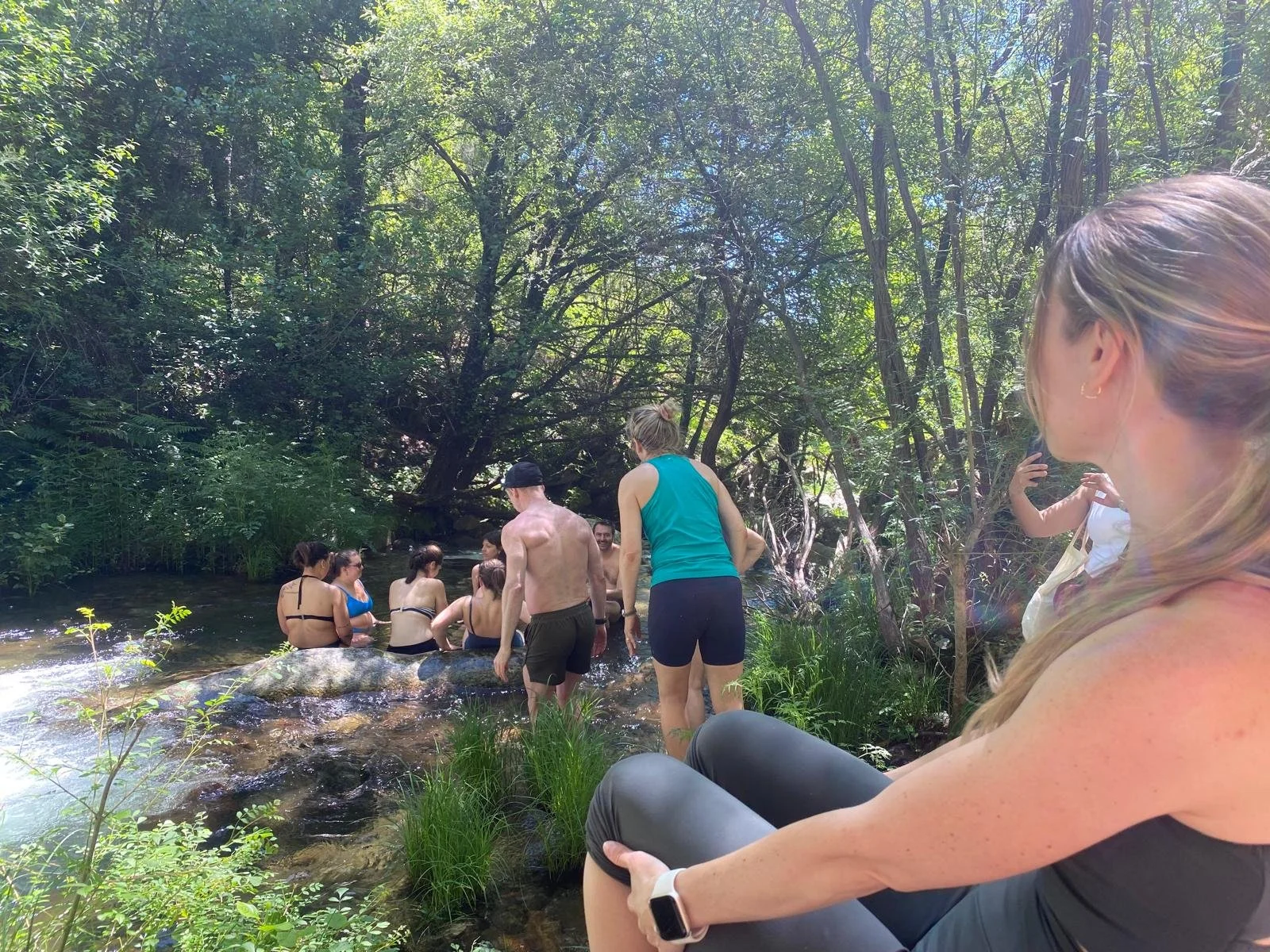
Yoga retreat near Madrid in nature with small group relaxing outdoors
You might be thinking about joining a yoga retreat, but not quite sure if it’s for you.
Maybe it feels like a big step - taking time away, committing to something unfamiliar, perhaps going on your own or wondering what it will actually be like.
A lot of people arrive with similar questions. Not because they’re not interested, but because they’re not sure what to expect or whether it’s worth it.
If that’s you, this will give you a clearer, more honest picture.
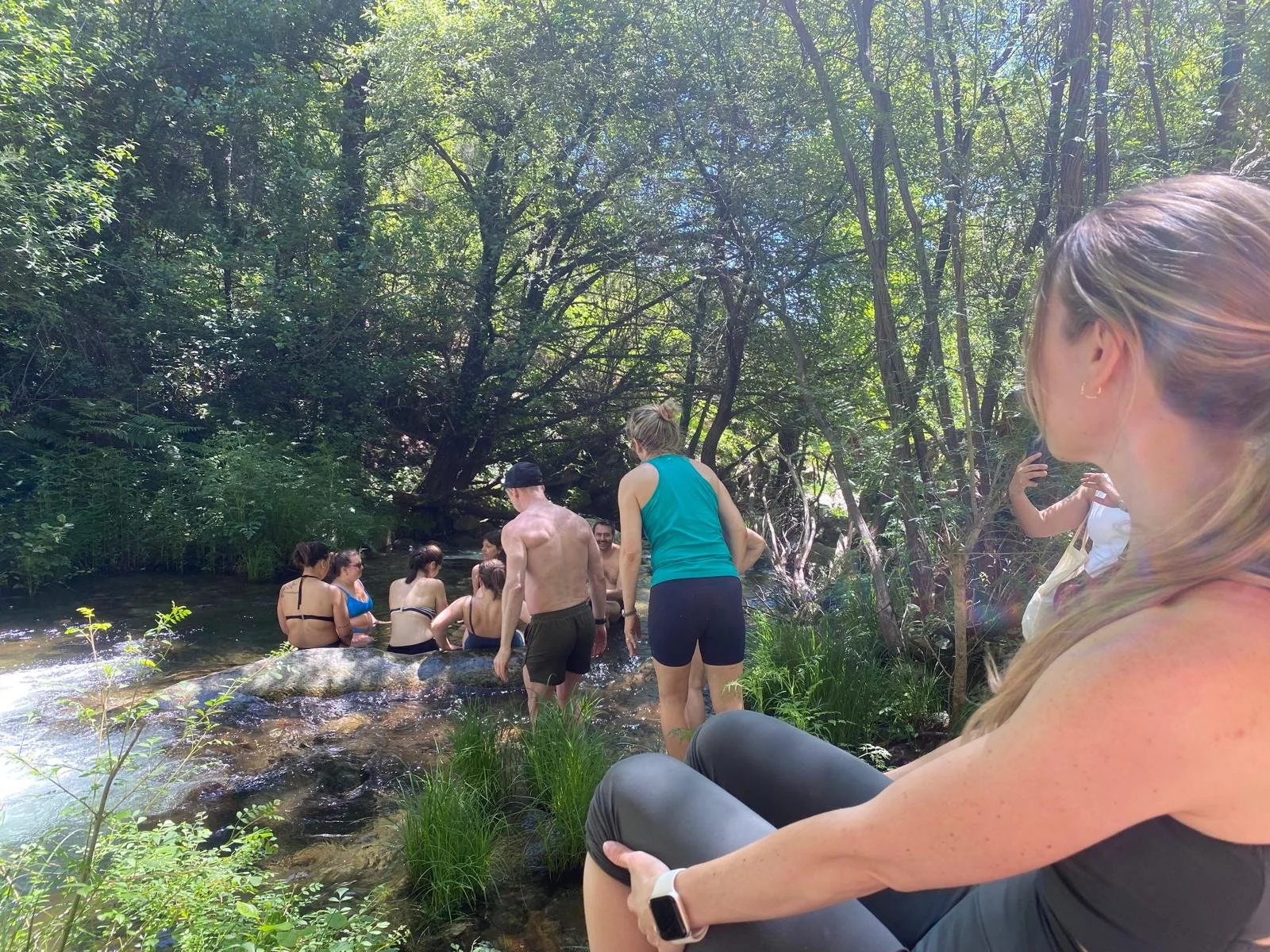
Yoga retreat near Madrid in nature with small group relaxing outdoors
What people imagine a retreat to be
Before coming on a retreat, many people picture something quite different to the reality.
They imagine:
a full schedule with very little downtime
long, intense yoga sessions
a group of very flexible or experienced people
something a bit intimidating or out of their comfort zone
And it makes sense. If you’ve never been on one before, it’s easy to assume it might feel structured or demanding.
For some retreats, that might be true.
But it’s not the only way.
What it’s actually like
On a smaller, more grounded retreat, the experience tends to be much simpler.
There’s time and space.
Time to wake up slowly, sit outside, chat after meals and do nothing in particular.
The yoga is there, but it’s not the whole point. It’s a way to reconnect with your body rather than something to achieve.
You also get to be cooked for. Delicious, filling, homemade vegetarian meals.
Everything is optional. You’re not expected to do every session or take part in everything.
The group is usually small, which means it feels more relaxed and personal. People arrive not knowing each other, and by the end there’s a sense of ease that’s hard to create in everyday life.
If you want a clearer idea of how a weekend like this flows, you can read more about a typical yoga retreat near Madrid.
When it is worth it
A retreat can feel really valuable when life has been full or a bit overwhelming.
Just the usual build-up of work, responsibilities, and constant thinking.
It tends to be most helpful when:
you’ve been feeling mentally busy or stretched
you want a bit of space away from your usual routine
you’re really want time in nature
you’d like to reconnect with your body in a simple, supported way
We are not just escaping life. We are stepping out of it briefly, so you can come back with a bit more clarity and energy.
When it might not be the right time
It’s also worth saying: a retreat isn’t always the right fit all the time.
For example:
if you prefer being constantly active or stimulated
if slowing down feels like it could be too frustrating right now
if the timing or logistics feel stressful to organise
A retreat works best when there’s at least a small part of you that’s ready to pause, even if the rest of you feels unsure.
A different way to think about it
Rather than thinking of a retreat as something that needs to “change” anything, it can be simpler than that.
It’s just a bit of time and space.
Time to step out of your usual environment, move, rest, be in nature and reconnect.
Space to notice how you feel when things are less rushed.
And often, that’s where we start to feel better - not because we’ve tried to force it but because you’ve given it room.
If you’re considering one
If you’ve been thinking about taking a couple of days for yourself, I run yoga retreats just outside Madrid.
They’re designed to be simple, supportive and unhurried with time for yoga, rest, food, nature and connection.
You can join our waitlist to find out about future events here
PS Are you are yoga teacher?
Planning your own first event can feel incredibly overwhelming. I offer 1:1 mentoring to help new and expat teachers confidently sequence and build their business offerings abroad. Book a free 15-minute clarity call with me here.
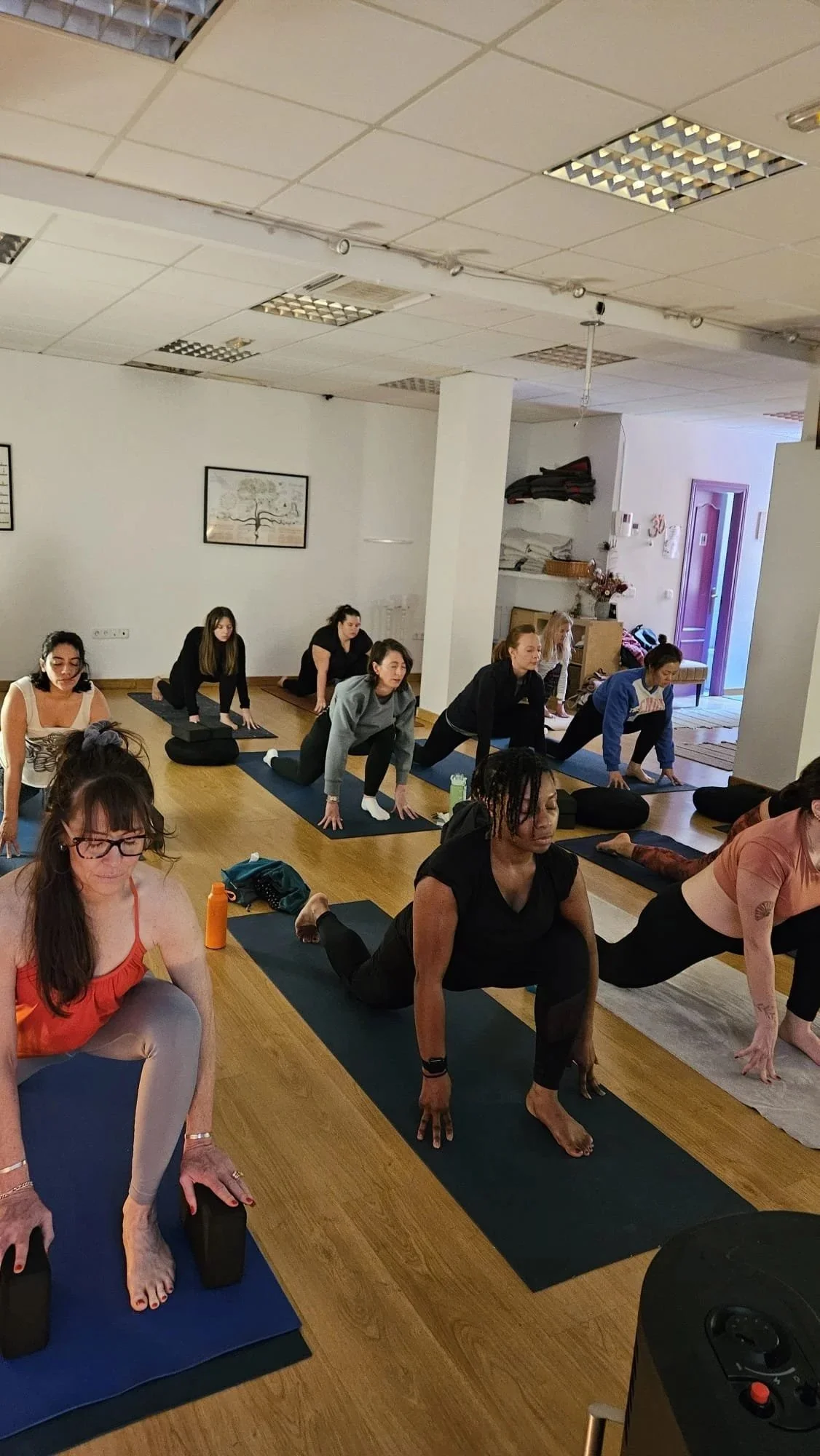
Why Practicing Yoga in English in Madrid Makes a Difference When Living Abroad
Yoga in English In Madrid
Living in another country challenges us in beautiful ways. We learn a new language, new habits, new ways of seeing the world. Even when the move is exciting, there’s often a lot of effort involved about doing everyday tasks.
We’re listening more closely. Translating, interpreting tone, searching for the right word, adjusting how we express ourselves.
Even if we speak Spanish well, there’s definitely a cognitive load there that never fully switches off.
And over time, that effort can be tiring for the nervous system. This is why something like practicing yoga in a familiar language or your native language can make a deeper difference than we might expect.
The nervous system needs familiarity
Yoga is often described as movement and breath - but at its heart, it helps us to regulate the nervous system.
When we step onto our mat, our system is looking for safety, steadiness and clarity.
If we’re mentally translating every cue, even subconsciously - our brain is still working. We’re processing language instead of fully landing in sensation.
Practicing yoga in English when we’re living abroad removes that extra layer of effort. The instructions land immediately. The breath cues feel intuitive. The tone feels natural. Instead of thinking, we soften.
And that softening is often where the real practice begins.
Subtle alignment cues matter
Yoga is full of nuances.
A small shift in the pelvis. A gentle engagement of the lower ribs. The difference between “lift” and “lengthen.” These are subtle things.
When cues are in a language you feel comfortable with, they reach you more precisely. You don’t have to second-guess what was said. You can trust what you heard.
This clarity creates ease and ease allows depth, so you can inhabit the experience without hesitation.
Understanding the philosophy more deeply
Yoga isn’t just physical postures. It is one part of a whole system based on yoga philosophy: concepts of how we interact with the world, awareness, steadiness, compassion non-attachment.
When these ideas are shared in a language we truly understand, they land differently.
A word like “acceptance” or “effort” or “letting go” can sound simple but in a familiar, native or working language, it carries more subtlety, emotion and personal history.
When philosophy is explained in a language we know, we don’t just hear the translation. We feel the meaning. I explain more about why I include yoga philosophy in this guide.
That can shift the practice from something we do with our body to something we integrate into our life. And when something feels meaningful to us, connection often follows.
Community and shared experience
For many people living abroad, yoga becomes more than a physical practice. It becomes a point of connection.
Being in a room with other international people, people navigating similar transitions, cultural adjustments and questions about belonging, creates a sense of understanding and connection.
After class, you stay for coffee. Conversations unfold more easily. You realise you’re not the only one feeling pulled between worlds.
Practicing yoga in English in Madrid often brings together people who are looking for mindful movement and community. Here are some more wonderful wellness communities in Madrid.
It’s not about avoiding Spanish
Choosing to practice yoga in English doesn’t mean you’re resisting integration or avoiding learning the local language.
Learning Spanish, living in Madrid and engaging with the culture is part of the richness of being here.
It’s also okay to have one space in your week where you don’t have to try so hard.
A space where your body can relax without effort. Where your mind doesn’t have to keep up. Where you can simply arrive.
Sometimes familiarity creates the foundation that allows you to go further in every other area of life.
If you’re looking for English-speaking yoga classes in Madrid
Many people search for “English yoga in Madrid” or “English-speaking yoga classes for expats” because they want that sense of ease.
They want to move their body, calm their mind and feel part of something, without navigating language barriers at the same time.
If that resonates, you’re not alone.
We offer welcoming English-speaking yoga classes in central Madrid aimed for all levels, including complete beginners, whether you’re new to the city, recently arrived or have been here for years and still appreciate practicing in English.
Our intention isn’t performance. We focus on our inner experience, including grounding, nervous system regulation and connection. Here’s more on what to expect from your first class.
Creating anchors through English yoga in Madrid
When you live in another country, small anchors become important.
A regular café. A walking route you know well. A familiar face at the studio.
Yoga can become one of those anchors.
It doesn’t solve everything but, for an hour / 75 minutes, you’re in your body instead of your head. You’re breathing instead of translating.
You’re part of something instead of navigating alone. And that can really make all the difference.
If you're new to Madrid and looking for somewhere to meet people as well as practise, I've also written a guide to finding a yoga community in English in Madrid and more about us opening our own dedicated yoga studio here.
Frequently asked questions about English yoga in Madrid
Do you offer English-speaking yoga classes in Madrid?
Yes, we offer friendly, English-speaking yoga classes in central Madrid for all levels.
Are classes suitable for beginners?
Yes, classes are accessible whether you’re new to yoga or returning after a break. The ideal for beginners classes are Wednesday evenings and the Sunday earlier class. You don’t need to be flexible to start (or at all!).
Where are classes held?
Classes take place in central Madrid and Retiro Park with easy metro access. We will welcome you to our dedicated yoga studio home in Ópera, central Madrid as soon as we open.
Do you offer outdoor yoga in Madrid?
Yes! During spring, summer and early autumn we also have our English-speaking yoga classes in Retiro Park in central Madrid. Practicing outdoors adds a different quality to the experience - more space, fresh air, a deeper connection to the environment and weekly picnics / socials to get to know other people! You can read more how Retiro Park is building Madrid warmest expat community.
What’s the difference between Hatha Yoga, yin yoga and meditation?
If you're not sure what the differences are or what could be the right fit for you, please read my guide to choosing the right yoga class in Madrid. We have written more on yin yoga here.
If you’re looking for English-speaking yoga classes in Madrid while living abroad, having a space where you can practice in a language you know can make all the difference.
You can find our schedule of English-speaking yoga classes in central Madrid here and we look forward to welcoming you soon.