Hatha Yoga, Yin Yoga Or Meditation? How To Choose the Right Yoga Class in Madrid
Not all yoga classes are the same. If you've ever wondered about the difference between Hatha Yoga, Yin Yoga and Meditation, this guide will help you choose the right class for your needs and goals in Madrid.
If you've ever looked at a yoga timetable and wondered which class to choose, you're not alone.
One of the questions I hear most often from new students is:
"What's the difference between Hatha Yoga, Yin Yoga and Meditation?"
Many people assume yoga is one thing, but classes can feel very different depending on the style, pace and focus.
Some classes are more active and movement-based. Others are slower and designed to help you unwind. Some involve very little movement at all.
The good news is that there isn't a right or wrong choice. It simply depends on what you're looking for right now and what you might like.
Whether you're completely new to yoga or looking for classes in Madrid, here's a simple guide to help you decide.
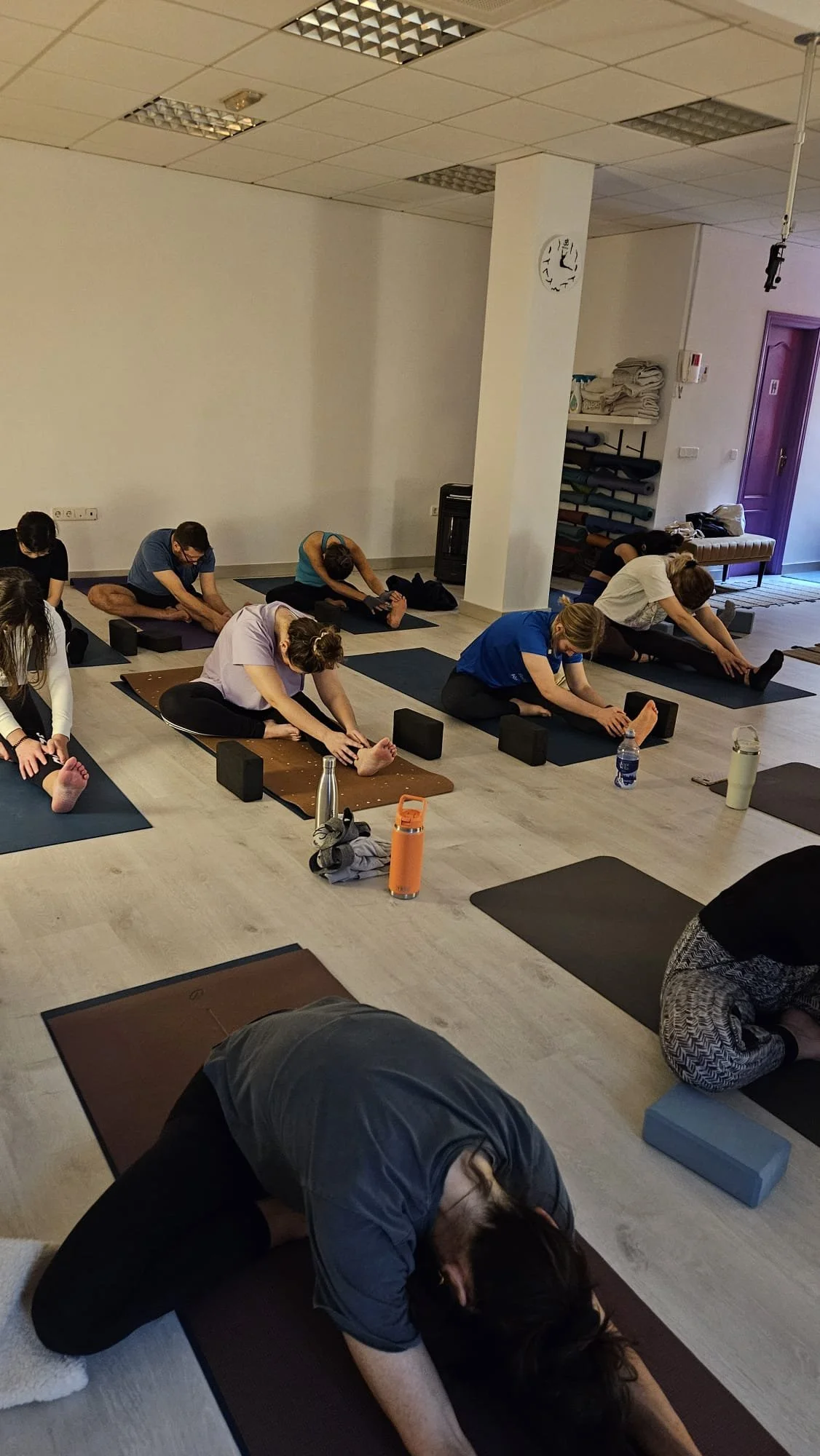
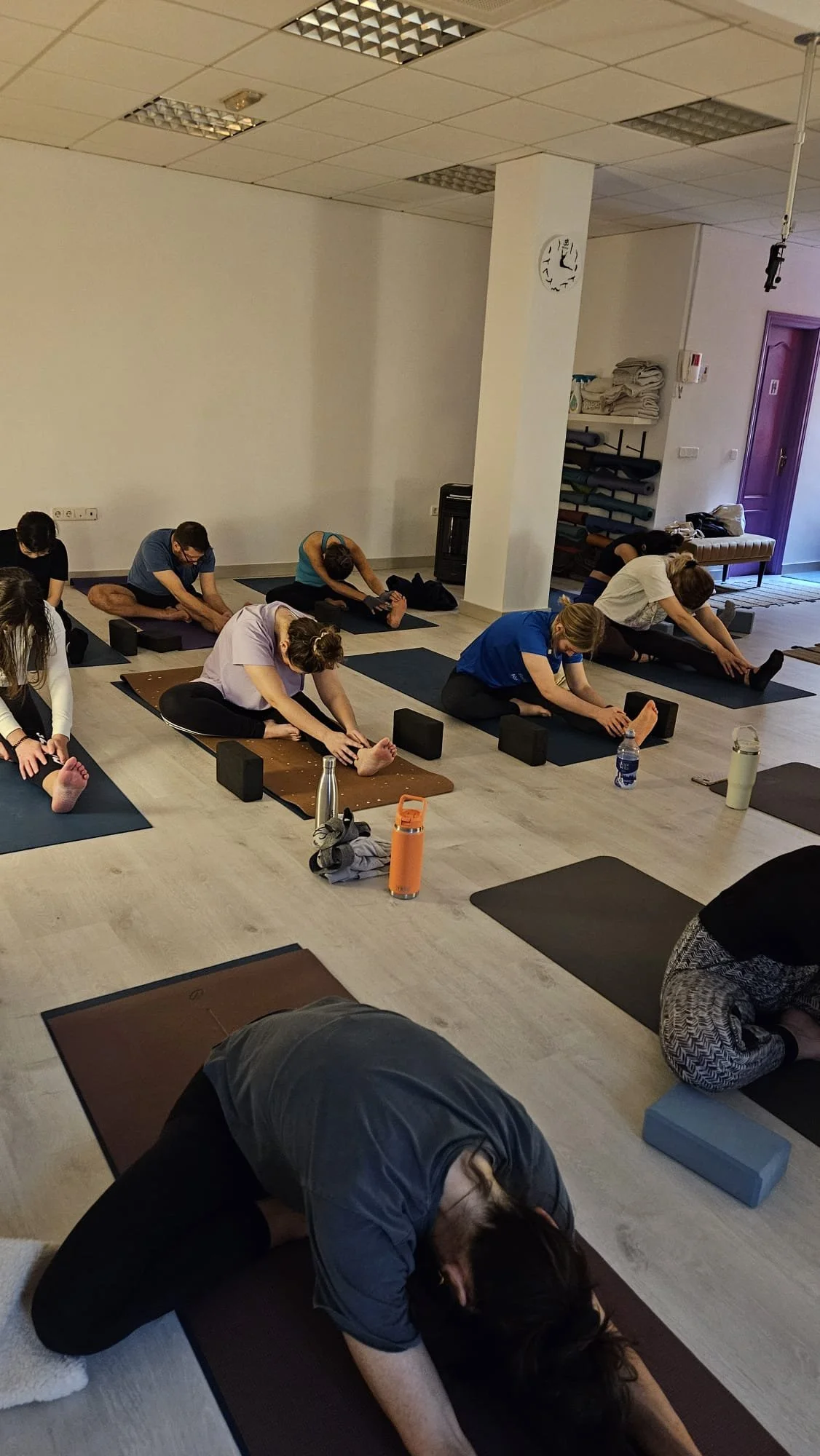
Hatha Yoga in Central Madrid
What Is Hatha Yoga?
Hatha Yoga is often considered the foundation of many modern yoga styles.
In a typical Hatha class, you'll move through a series of postures while connecting movement with your breath. Classes often include gentle warm-ups, sun salutations, a mixture of standing poses, balance work, gentle strengthening, stretching and relaxation.
In my own classes, Hatha Yoga tends to attract people who spend long hours sitting at desks, feel mentally busy or simply want to move their bodies in a way that feels supportive rather than exhausting. Some classes are a bit faster (like more “vinyasa” style) but others are more classic hatha with steady poses held for 3-5 breaths.
You don't need to be flexible, fit or able to touch your toes, despite what you might see on social media. Yoga isn't a performance. A class is an opportunity to explore how movement, breath and awareness feel in your own body.
Many students tell me they leave feeling both more energised and more grounded than when they arrived.
Hatha Yoga may be a good fit if:
You're new to yoga
You want to improve strength, balance and mobility
You spend a lot of time sitting
You enjoy movement but don't want an intense workout
You're looking for a balanced practice
What Is Yin Yoga?
Yin Yoga is a much slower style of yoga.
Rather than moving frequently between postures, you'll stay in each pose for several minutes. The focus is on allowing the body to gradually soften and release, working with the connective tissues of the body (often referred to as fascia), rather than stretch deeply through force.
Many people are surprised by Yin Yoga.
From the outside it can look easy because there is less movement. In reality, slowing down and staying still can sometimes feel more challenging than moving. It is like a meditation in different poses.
Yin Yoga can be particularly helpful if you have a busy lifestyle and rarely give yourself permission to pause.
It's also a useful complement to more active forms of exercise such as running, cycling, strength training or dynamic yoga practices and can help to improve flexibility.
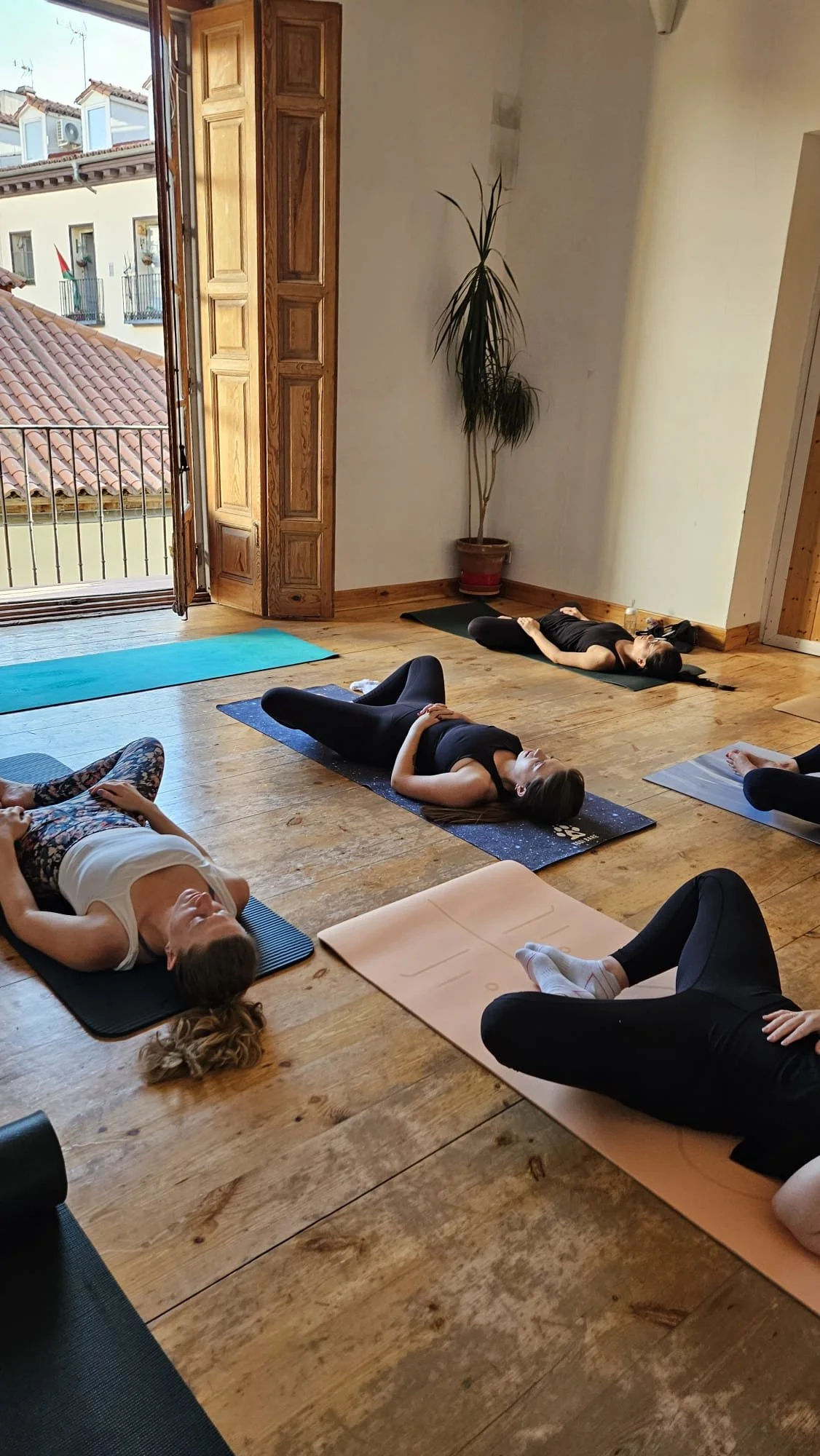
Yin yoga class
Yin Yoga may be a good fit if:
You often feel stressed or overwhelmed
Your body feels tight from exercise or desk work
You struggle to slow down
You want to improve mobility and flexibility
You're looking for a calmer slower practice
What About Meditation?
Meditation is often misunderstood.
Many people think meditation means emptying your mind or stopping your thoughts.
In reality, meditation is more about learning how to observe what's happening without immediately reacting to it.
Some days that might mean noticing your breath.
Other days it might mean noticing how busy your mind feels.
I've found that meditation can be one of the most valuable practices people develop: not because it makes life stress-free, but because it helps us respond differently when stress appears. It doesn’t always have to be a sit-down practice; it can also be walking, through yoga poses or any everyday task.
Like any skill, it becomes easier with practice.
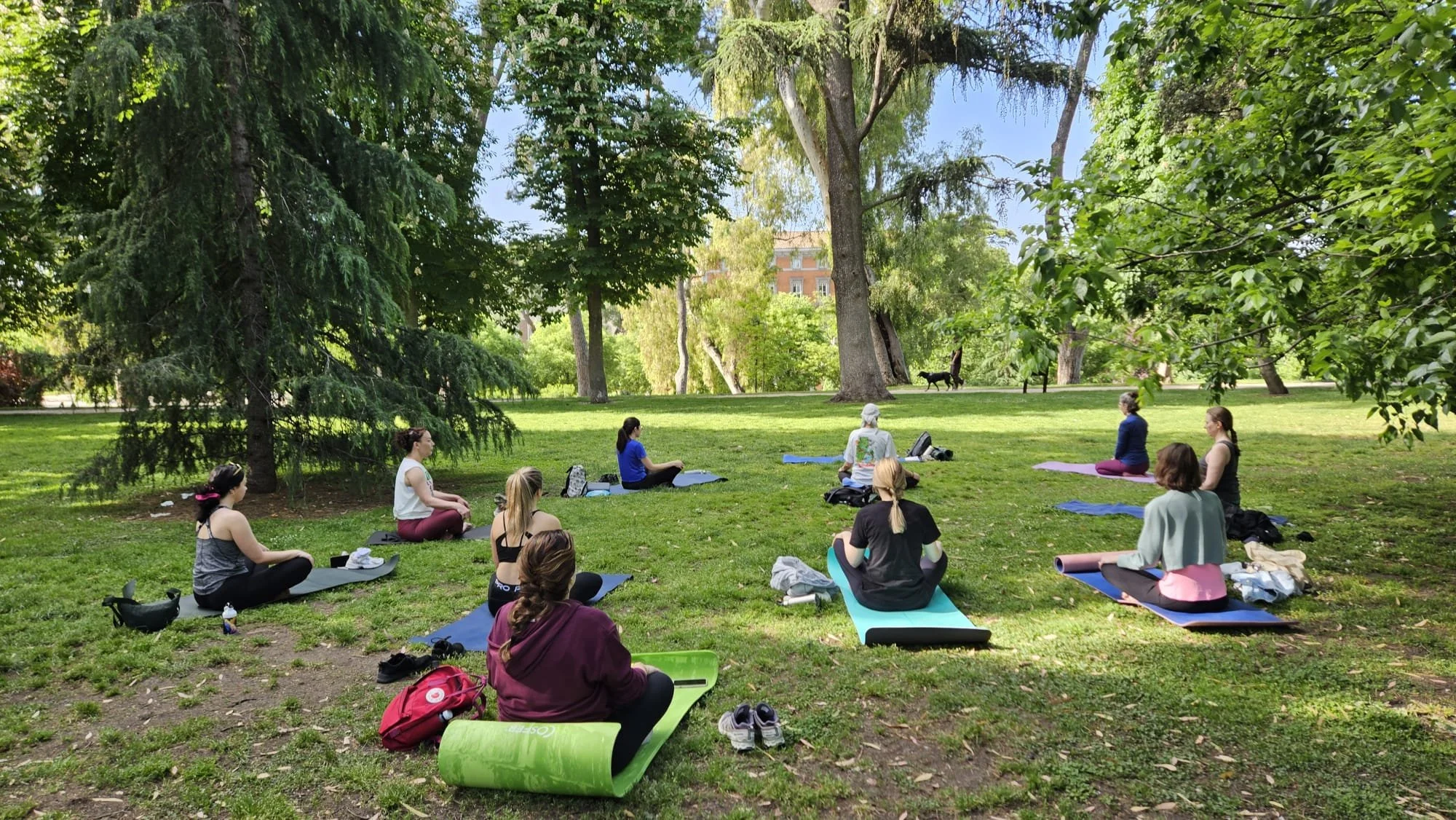
Meditation at the start of a yoga class
Meditation may be a good fit if:
You struggle to switch off mentally
You experience stress or anxiety
You want to improve focus and concentration
You feel constantly busy
You're curious about mindfulness
Which Yoga Class Is Right for You?
If you're still unsure, here's a simple guide.
Choose Hatha Yoga if:
You want movement, stretching and a well-rounded practice.
Choose Yin Yoga if:
You need to slow down and create space in your week.
Choose Meditation if:
Your biggest challenge can often be what's happening in your mind rather than your body.
Of course, many people enjoy a combination of all three.
In fact, some of the students who attend my classes regularly practise Hatha Yoga for movement and strength, Yin Yoga for recovery and meditation is integrated in our classes for mental clarity.
How often you practise, and how you combine different styles, can depend on your schedule and what you need from your practice. Read more about how often to practise yoga as a beginner.
Do You Need To Be Flexible To Start Yoga?
Absolutely not.
This is probably the biggest myth that prevents people from trying yoga.
Flexibility is not a requirement for yoga.
It's something that may improve over time, just as strength, balance and body awareness can improve over time.
Some of the people who benefit most from yoga are those who arrive feeling stiff, stressed and convinced they're "not a yoga person." You can find more about whether you need to be flexible to start yoga here.
Isn't Yoga More Than Physical Postures?
One thing worth mentioning is that yoga is about much more than stretching or improving flexibility.
While physical postures (asana) are often what bring people to class, traditional yoga also includes breathing practices, meditation and philosophy.
In my classes, we often explore simple themes from yoga philosophy and consider how they apply to everyday life. Sometimes this might be contentment (Santosha), non-harming (Ahimsa) or finding balance rather than always pushing harder. Find out more about why I include yoga philosophy in my classes here.
You don't need to know anything about yoga philosophy to attend a class, but many students find these ideas are what keep them coming back long after they've learned the physical poses.
For me, yoga isn't about performing shapes. It's about learning skills that help us navigate daily life with a little more awareness, balance and ease, and that’s something we regularly explore in my yoga classes in Madrid.
Finding the Right Yoga Class in Madrid
The best yoga class isn't necessarily the most popular, the most advanced or the most challenging.
It's the one that helps you feel better and supports what you need right now. Here’s more on what to expect from your first class.
If you're looking for yoga classes in Madrid, I teach Hatha Yoga, Yin Yoga and Meditation in English in both studio and outdoor settings. Classes are welcoming, accessible and suitable for a range of experience levels. You can read more on the benefits of practising in English here.
The easiest way to find out whether a class is right for you is simply to come and try one.
We meet weekly in studios across central Madrid and in Retiro Park during the warmer months for hatha yoga, yin yoga and meditation. Alongside the yoga itself, many people stay for coffee after class every week, and we also have regular picnics, brunches, socials and annual retreats , making it a great way to meet like-minded people and build community in the city.
If you're looking for yoga classes in Madrid that combine movement, mindfulness and community, I'd love to welcome you to a class.
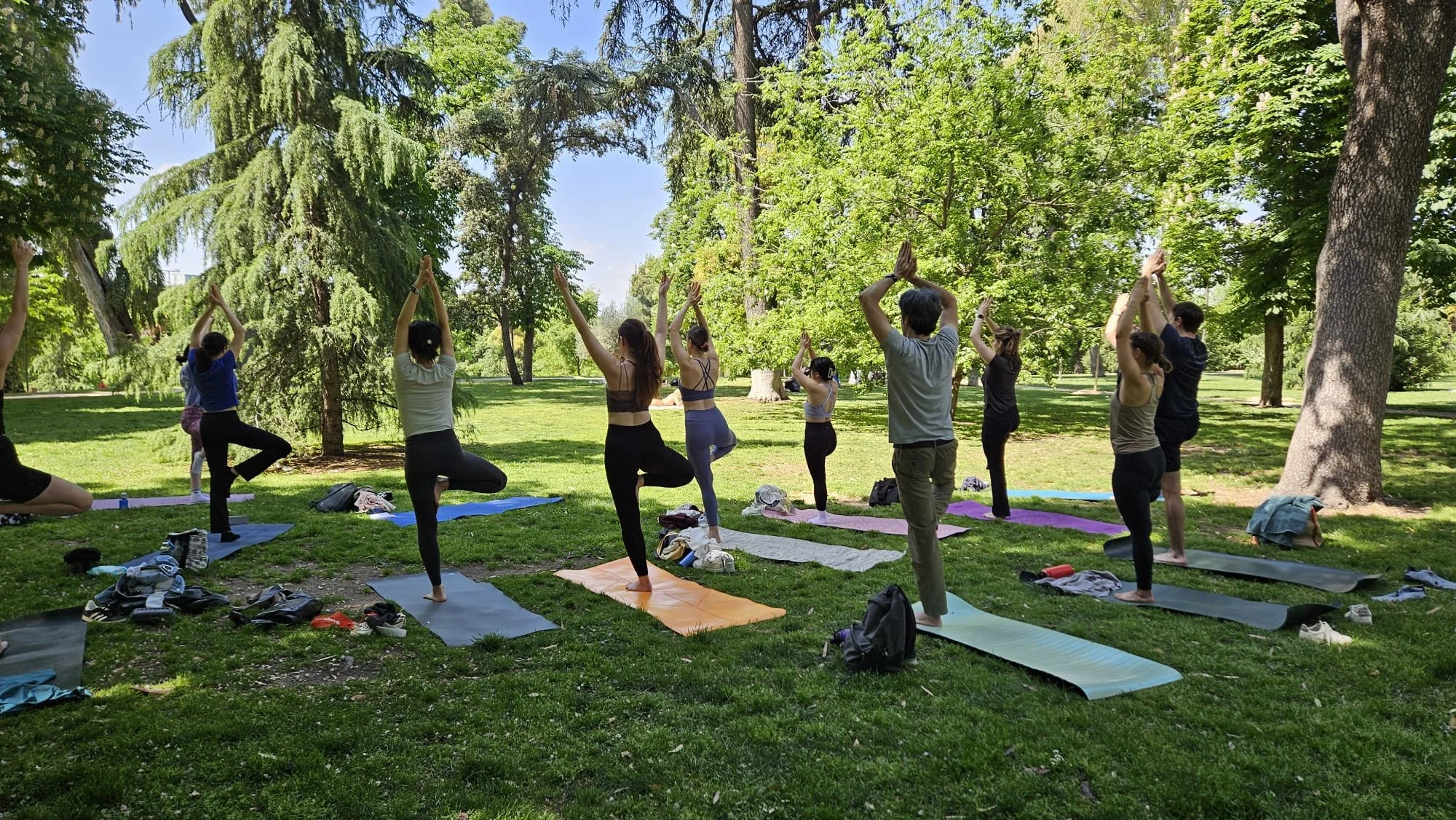
Beyond the Mat: How Retiro Park Yoga is Building Madrid’s Warmest Expat Community
Moving to Madrid is an incredible adventure, filled with sun-drenched afternoons, coffees outdoors and the thrill of a new culture. But let’s be honest for a moment: it can also be incredibly lonely. Navigating a new city, trying to build a social circle from scratch, and dealing with a language barrier can leave us feeling untethered.
When you are craving genuine connection, loud networking events or crowded bars often feel forced or overwhelming. What if the easiest way to find your people in Spain wasn't at a drinks event, but on a yoga mat under the shade of the trees?
You don't have to navigate life in Madrid alone. Our outdoor yoga and social sessions run weekly in Retiro Park when the weather is good (usually in April, May, June, September and early October).
Classes are taught in English, open to all levels and designed to help you ground and connect.
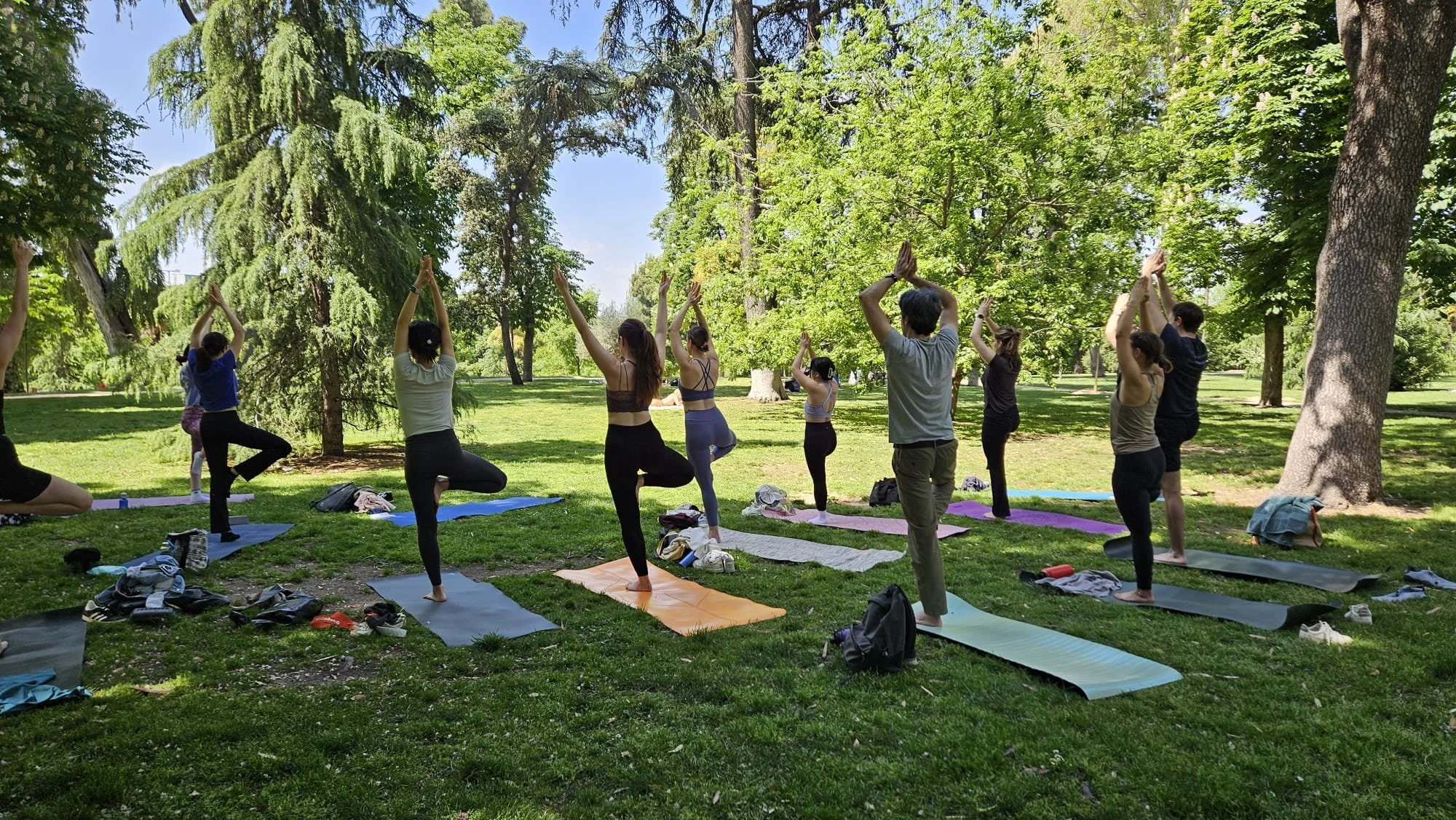
Yoga in English in Retiro Park
The Science of Moving and Breathing Together
There is a unique magic that happens when we practice yoga in a group. In psychology, there is a concept known as "collective effervescence": the synchronized energy and sense of belonging we feel when we move and breathe in unison with other humans.
When you practice solo at home, you get the physical benefits of yoga. But when you practice in a group, your nervous system co-regulates with the people around you. Your social defenses naturally drop, stress hormones decrease, and a shared sense of safety takes over. By the time Savasana ends, you aren't just relaxed - you feel connected to the collective energy of the space.
You can learn more about the differences between Hatha Yoga, yin yoga and meditation in our guide.
Why the Park Lowers Our Barriers
Studio walls can sometimes feel formal or intimidating, especially if you are new to yoga or new to a city. Moving our practice outside into the heart of Retiro Park changes everything.
Under the trees, surrounded by nature, the pressure evaporates. The casual environment of the park plus the friendly group makes it natural to strike up a conversation while rolling up your mat. You aren’t rushing out the door to catch a metro as you are already in the most beautiful backyard in Madrid, perfectly positioned to slow down and chat.
It’s Never Just About the Yoga
At Atiyasana, the yoga posture sequence is only one part of the experience. The magic continues after we close.
Our weekly sessions are built around community. Nearly every week our classes naturally transition into casual park picnics, coffee chats or weekend plans. We have watched beautiful friendships and travel plans form right here in our group. This isn't just an outdoor class; it’s a weekly sanctuary where you can speak a language you feel comfortable in, share your expat highs and lows, and feel completely understood.
Here’s more on what to expect from your first yoga class.
Ready to Find Your People in Madrid?
Don’t spend another weekend scrolling through meetup groups wondering how to connect. Sign up for class, breathe the fresh park air, and meet a warm, welcoming community of global minds who understand exactly what it’s like to build a life abroad.
If you're new to Madrid, you might also find my guide to finding a yoga community in English useful.
PS if you don’t have a mat you can bring a towel or please message us in advance and we can bring you a spare.
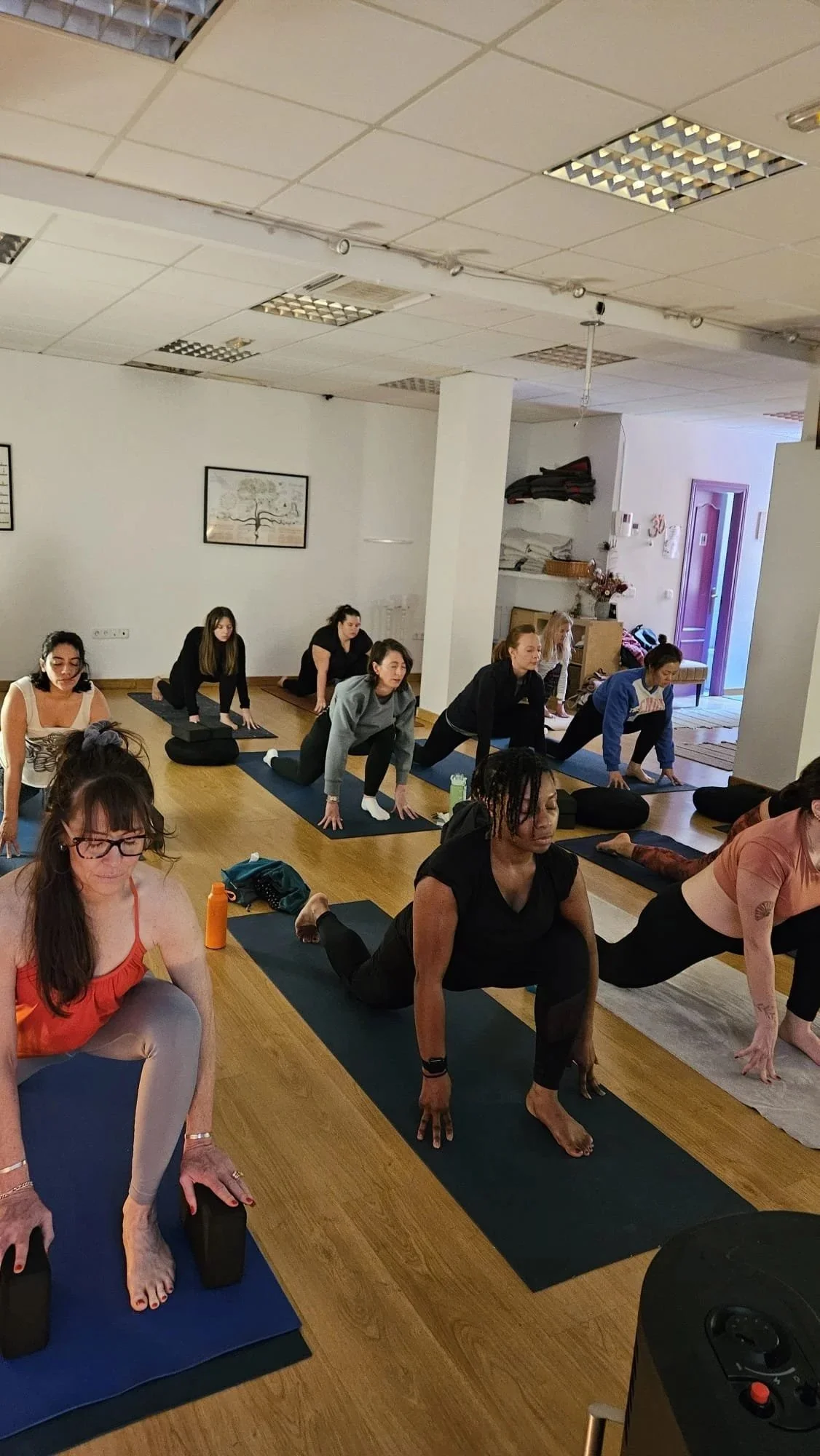
Why Practicing Yoga in English in Madrid Makes a Difference When Living Abroad
Yoga in English In Madrid
Living in another country challenges us in beautiful ways. We learn a new language, new habits, new ways of seeing the world. Even when the move is exciting, there’s often a lot of effort involved about doing everyday tasks.
We’re listening more closely. Translating, interpreting tone, searching for the right word, adjusting how we express ourselves.
Even if we speak Spanish well, there’s definitely a cognitive load there that never fully switches off.
And over time, that effort can be tiring for the nervous system. This is why something like practicing yoga in a familiar language or your native language can make a deeper difference than we might expect.
The nervous system needs familiarity
Yoga is often described as movement and breath - but at its heart, it helps us to regulate the nervous system.
When we step onto our mat, our system is looking for safety, steadiness and clarity.
If we’re mentally translating every cue, even subconsciously - our brain is still working. We’re processing language instead of fully landing in sensation.
Practicing yoga in English when we’re living abroad removes that extra layer of effort. The instructions land immediately. The breath cues feel intuitive. The tone feels natural. Instead of thinking, we soften.
And that softening is often where the real practice begins.
Subtle alignment cues matter
Yoga is full of nuances.
A small shift in the pelvis. A gentle engagement of the lower ribs. The difference between “lift” and “lengthen.” These are subtle things.
When cues are in a language you feel comfortable with, they reach you more precisely. You don’t have to second-guess what was said. You can trust what you heard.
This clarity creates ease and ease allows depth, so you can inhabit the experience without hesitation.
Understanding the philosophy more deeply
Yoga isn’t just physical postures. It is one part of a whole system based on yoga philosophy: concepts of how we interact with the world, awareness, steadiness, compassion non-attachment.
When these ideas are shared in a language we truly understand, they land differently.
A word like “acceptance” or “effort” or “letting go” can sound simple but in a familiar, native or working language, it carries more subtlety, emotion and personal history.
When philosophy is explained in a language we know, we don’t just hear the translation. We feel the meaning. I explain more about why I include yoga philosophy in this guide.
That can shift the practice from something we do with our body to something we integrate into our life. And when something feels meaningful to us, connection often follows.
Community and shared experience
For many people living abroad, yoga becomes more than a physical practice. It becomes a point of connection.
Being in a room with other international people, people navigating similar transitions, cultural adjustments and questions about belonging, creates a sense of understanding and connection.
After class, you stay for coffee. Conversations unfold more easily. You realise you’re not the only one feeling pulled between worlds.
Practicing yoga in English in Madrid often brings together people who are looking for mindful movement and community. Here are some more wonderful wellness communities in Madrid.
It’s not about avoiding Spanish
Choosing to practice yoga in English doesn’t mean you’re resisting integration or avoiding learning the local language.
Learning Spanish, living in Madrid and engaging with the culture is part of the richness of being here.
It’s also okay to have one space in your week where you don’t have to try so hard.
A space where your body can relax without effort. Where your mind doesn’t have to keep up. Where you can simply arrive.
Sometimes familiarity creates the foundation that allows you to go further in every other area of life.
If you’re looking for English-speaking yoga classes in Madrid
Many people search for “English yoga in Madrid” or “English-speaking yoga classes for expats” because they want that sense of ease.
They want to move their body, calm their mind and feel part of something, without navigating language barriers at the same time.
If that resonates, you’re not alone.
We offer welcoming English-speaking yoga classes in central Madrid aimed for all levels, including complete beginners, whether you’re new to the city, recently arrived or have been here for years and still appreciate practicing in English.
Our intention isn’t performance. We focus on our inner experience, including grounding, nervous system regulation and connection. Here’s more on what to expect from your first class.
Creating anchors through English yoga in Madrid
When you live in another country, small anchors become important.
A regular café. A walking route you know well. A familiar face at the studio.
Yoga can become one of those anchors.
It doesn’t solve everything but, for an hour / 75 minutes, you’re in your body instead of your head. You’re breathing instead of translating.
You’re part of something instead of navigating alone. And that can really make all the difference.
If you're new to Madrid and looking for somewhere to meet people as well as practise, I've also written a guide to finding a yoga community in English in Madrid.
Frequently asked questions about English yoga in Madrid
Do you offer English-speaking yoga classes in Madrid?
Yes, we offer friendly, English-speaking yoga classes in central Madrid for all levels.
Are classes suitable for beginners?
Yes, classes are accessible whether you’re new to yoga or returning after a break. The ideal for beginners classes are Wednesday evenings and the Sunday earlier class. You don’t need to be flexible to start (or at all!).
Where are classes held?
Classes take place in central Madrid with easy metro access.
Do you offer outdoor yoga in Madrid?
Yes! During spring, summer and early autumn we also have our English-speaking yoga classes in Retiro Park in central Madrid. Practicing outdoors adds a different quality to the experience - more space, fresh air, a deeper connection to the environment and weekly picnics / socials to get to know other people! You can read more how Retiro Park is building Madrid warmest expat community.
What’s the difference between Hatha Yoga, yin yoga and meditation?
If you're not sure what the differences are or what could be the right fit for you, please read my guide to choosing the right yoga class in Madrid.
If you’re looking for English-speaking yoga classes in Madrid while living abroad, having a space where you can practice in a language you know can make all the difference.
You can find our schedule of English-speaking yoga classes in central Madrid here and we look forward to welcoming you soon.