Why I Include Yoga Philosophy in My Classes
Yoga is about far more than physical postures. Discover why I include simple themes from yoga philosophy in my classes and how they can help us navigate everyday life with greater awareness, kindness and balance.
Have you ever been to a yoga class where the teacher mentioned something called Ahimsa, Santosha or Aparigraha and wondered what on earth they were talking about?
If so, you're not alone.
When people first come to yoga, they usually expect movement, stretching and perhaps a little relaxation at the end.
They don't always expect to leave thinking about kindness, contentment or letting go.
Yet these concepts are one of the reasons I really started to love yoga.
While yoga postures (known as asana) are an important part of the practice, they're only one piece of a much bigger picture.
Yoga isn't about touching your toes or holding a balance. It's about learning practical tools that help us navigate everyday life with a little more awareness, balance and compassion.
That's why I often include a short theme from yoga philosophy at the beginning and at points in the class.
Not because I want to give a lecture. These concepts have a remarkable way of becoming relevant long after we've finished class.
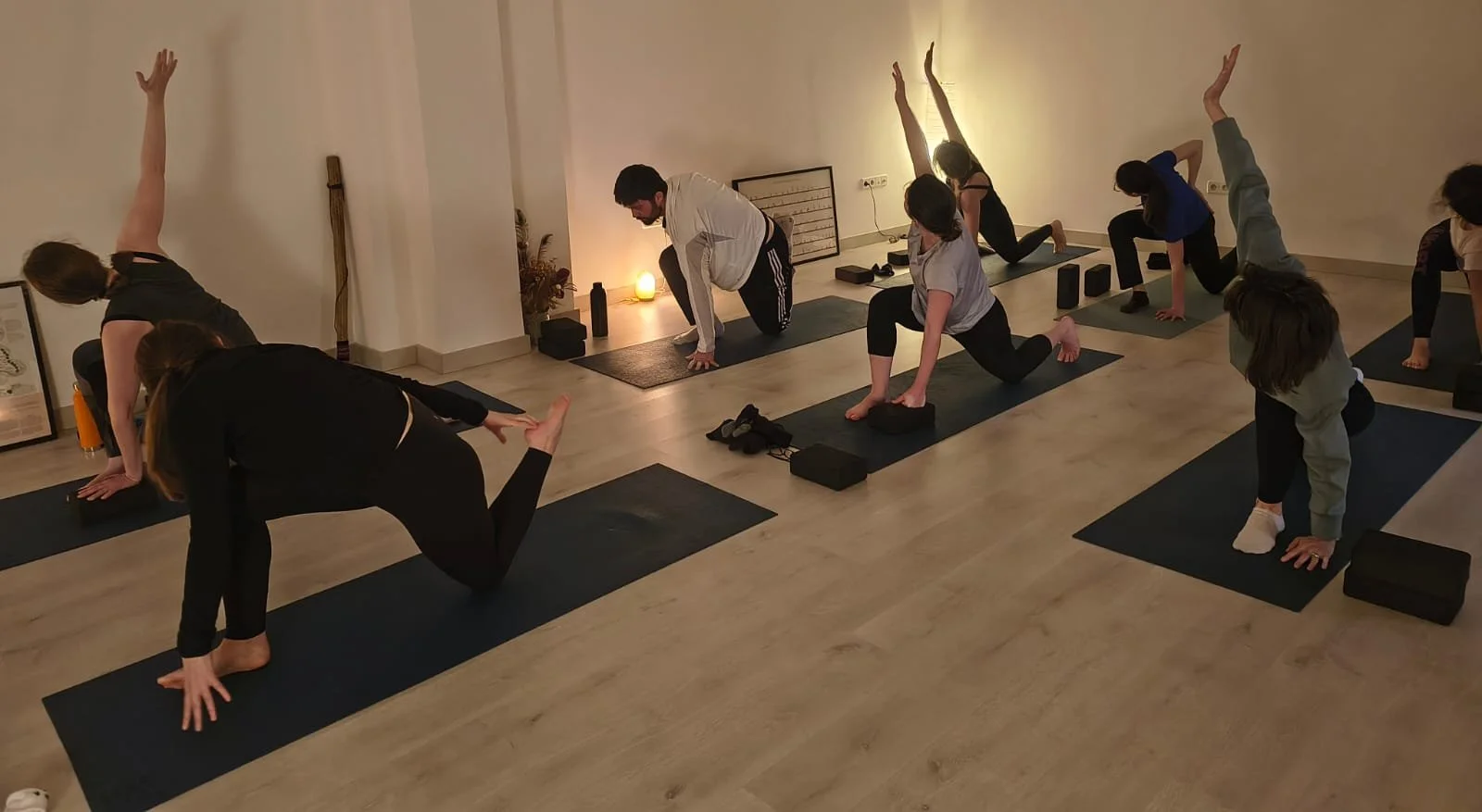
Yoga Class in Madrid
Isn't Yoga Just Physical Exercise?
This is probably one of the biggest misconceptions about yoga.
Many people first discover yoga because they want to improve flexibility, build strength, ease back pain or help with anxiety. Learn more about how yoga can help with stress and overthinking.
Those are wonderful reasons to begin.
Traditionally though, yoga has always been about much more than the physical practice.
The postures help us become stronger and more mobile, but they also teach us how we respond to challenge.
Whether we force, compare ourselves with others, if we can we breathe when something feels uncomfortable etc.
These observations matter far more than whether our hands reach the floor.
What Is Yoga Philosophy?
Don't worry - you won't need to memorise Sanskrit words or study ancient texts before coming to class.
Yoga philosophy is simply a collection of ideas that encourage us to live with greater awareness.
Many of the themes we explore are very practical.
For example:
Ahimsa (non-harming) reminds us to be kind. Not only to other people, but also to ourselves.
Sometimes that means choosing to rest instead of constantly pushing harder.
Santosha (contentment) invites us to appreciate where we are today instead of always believing happiness lives in the next thing or achievement.
Aparigraha (letting go) encourages us to release things that no longer helps us, whether that's perfectionism, comparison or expectations we place on ourselves.
These aren't rules.
They're invitations to reflect.
Philosophy Doesn't Stay In Class
One of my favourite things is hearing students tell me they remembered a class theme during the week.
Perhaps they noticed themselves being kinder after making a mistake, or caught themselves comparing their progress with someone else, or remembered to pause before reacting in a stressful situation.
These are often the moments that stay with us longest.
Not because we've mastered a difficult pose but because we've approached everyday situations a little differently.
There Are No Right Answers
Something I love about yoga philosophy is that it isn't about being perfect.
Nobody practises Ahimsa perfectly or feels content every day.
We're all learning.
The philosophy gives us another way of looking at everyday life.
Sometimes the answer changes depending on what we’re doing, what our priorities at that time are and that is perfectly fine.
What This Looks Like in My Classes
If you come to one of my classes, you'll usually hear a short reflection at the beginning, often once we start moving.
It might be talking about a theme such as balance, patience or compassion or asking a question.
The philosophy isn't separate from the yoga.
It's woven into it.
Sometimes the movement helps us understand the idea.
Sometimes the idea helps us approach the movement differently.
You don't need any previous experience, and you're never expected to agree with every reflection. You don’t need to be flexible either.
They're simply invitations to listen and feel what resonates for you.
More Than an Hour in Class
For me, the best yoga classes don't finish when Savasana ends.
They continue in the conversations we have afterwards over coffee.
In the way we treat ourselves during a difficult week.
In the moments we choose presence over perfection.
That's what I hope people take away from my classes.
Not just stronger bodies, but practical tools they can carry into everyday life.
Yoga Classes in Madrid
If you're looking for yoga classes in Madrid, we teach Hatha Yoga, Yin Yoga and Meditation in English at Atiyasana, both in studios across central Madrid and outdoors in Retiro Park during the warmer months.
Classes are welcoming, beginner-friendly and designed for real life. Alongside the movement, we explore simple ideas from yoga philosophy that encourage us to slow down, reflect and connect with ourselves and with others. Learn more about what to expect in your first class in Madrid.
Many students also stay for coffee after class, and throughout the year we organise picnics, brunches and social events, making it a wonderful way to meet like-minded people and build community in Madrid.
If you're curious about trying a class, you're always very welcome.
Can Yoga Help With Stress and Overthinking?
Life can feel busy and overwhelming at times. Discover how yoga, meditation, breathwork and simple ideas from yoga philosophy can help you feel calmer, more grounded and better able to navigate everyday life.
We can often feel like we’re always on.
There's always another email to answer, another decision to make, another notification competing for our attention. Even when we finally sit down at the end of the day, our minds often carry on racing.
It's no surprise that one of the most common reasons people come to yoga is because they want to feel calmer.
A question I'm often asked is: "Can yoga actually help with stress and overthinking?"
In my experience, yes – but perhaps not in the way many people expect.
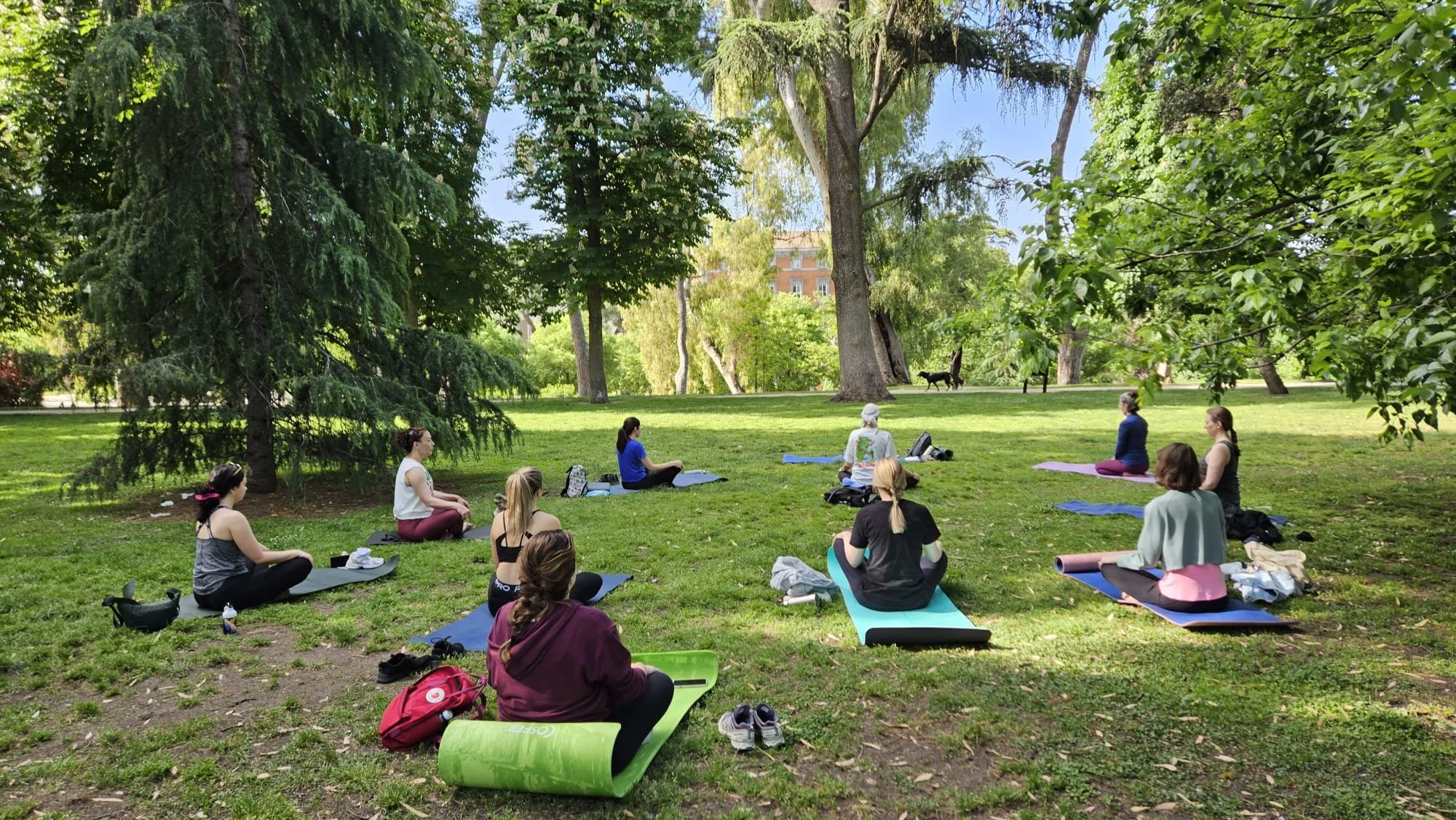
Yoga and meditation in Retiro Park
Yoga Doesn't Remove Stress
Yoga can't stop difficult things happening.
You'll still have deadlines, family responsibilities, busy weeks and moments where life feels overwhelming.
What yoga offers is a chance to observe how you respond. From there you can move towards making changes.
Rather than feeling constantly pulled from one thought to the next, you begin to notice what's happening with a little more awareness.
Sometimes that's enough to help you pause before reacting.
We Spend So Much Time in Our Heads
Many of us live almost entirely in our minds.
We're planning tomorrow's meeting while making dinner, replaying yesterday's conversation while walking to work, or worrying about something that hasn't even happened yet.
Yoga gently invites us back into the present.
Not by forcing the mind to be quiet, but by giving it something else to pay attention to: the breath, the body and the sensations of movement.
It's Not About Emptying Your Mind
One of the biggest myths about yoga and meditation is that you should stop thinking altogether.
If you've ever tried meditating, you'll know that's almost impossible.
The goal isn't to have no thoughts.
It's to notice your thoughts without feeling you have to follow every single one.
Some days your mind will feel busy.
Some days it will feel calmer.
Both are completely normal.
Moving Can Sometimes Be More Helpful Than Sitting Still
When people feel stressed, sometimes people assume they need the slowest class possible.
Sometimes that's true but not always.
I've often seen students arrive feeling mentally overwhelmed and leave a Hatha Yoga class looking noticeably calmer.
The combination of movement, breath and focused attention can help create space that simply sitting and trying to relax doesn't always provide.
Other times, Yin Yoga or meditation is exactly what's needed.
There isn't one perfect practice.
It's about finding what supports you in that moment. You can read this guide on helping you choose the right yoga class in Madrid for you.
Yoga Philosophy in Everyday Life
One of the reasons I love teaching yoga is that it offers tools we can take off the mat.
In class we often explore simple ideas from yoga philosophy.
Not as abstract concepts, but as practical reflections.
How can we be a little kinder to ourselves?
Can we notice when we're pushing too hard?
What would it look like to let go of perfection for just one day?
These aren't questions that eliminate stress, but they can change the way we experience it. I've written more about why I include philosophy in my yoga classes here.
Small Moments Add Up
People sometimes think they start yoga and their lives transform overnight.
More often, the changes are gradual.
You might sleep a little better.
Feel your shoulders relax.
Notice you’re breathing deeper and feel calmer.
Or you catch yourself before spiralling into overthinking.
These small moments build over time.
Finding Space to Breathe
Perhaps that's what yoga offers most.
Not a perfect life.
Just a little more space: to breathe, notice, respond rather than react.
And in a world that often asks us to do more, that can be surprisingly powerful.
Yoga Classes in Madrid
If you're looking for yoga classes in Madrid, I teach Hatha Yoga, Yin Yoga and Meditation in English in welcoming studio settings and in Retiro Park during the warmer months.
Whether you're completely new to yoga or returning after a break, classes are designed to help you move, breathe and reconnect with yourself - without pressure to perform or "get it right." If you’re completely new to yoga, you can learn more about what to expect in your first class here.
Alongside the yoga itself, many of us stay for coffee after class, and we regularly organise picnics, brunches and other social gatherings. Over time, what starts as a yoga class often becomes a supportive community of friends navigating life in Madrid together.
If you're feeling stressed, overwhelmed or simply curious about trying yoga, you're always welcome to join us for a class. I'd be happy to help you choose the class that's right for you too.
What to Expect in Your First Yoga Class in Madrid
Starting something new can feel exciting, but also a little intimidating.
If you're wondering what actually happens in a yoga class, this guide will walk you through what to expect, from movement and breathwork to philosophy, community and coffee afterwards.
Starting something new can feel exciting but also a little intimidating.
One of the questions I hear most often from people considering yoga is:
"What actually happens in a yoga class?"
Whether you're completely new to yoga, returning after a break, or looking for yoga classes in Madrid taught in English, here's a simple guide to what you can expect from your first class.
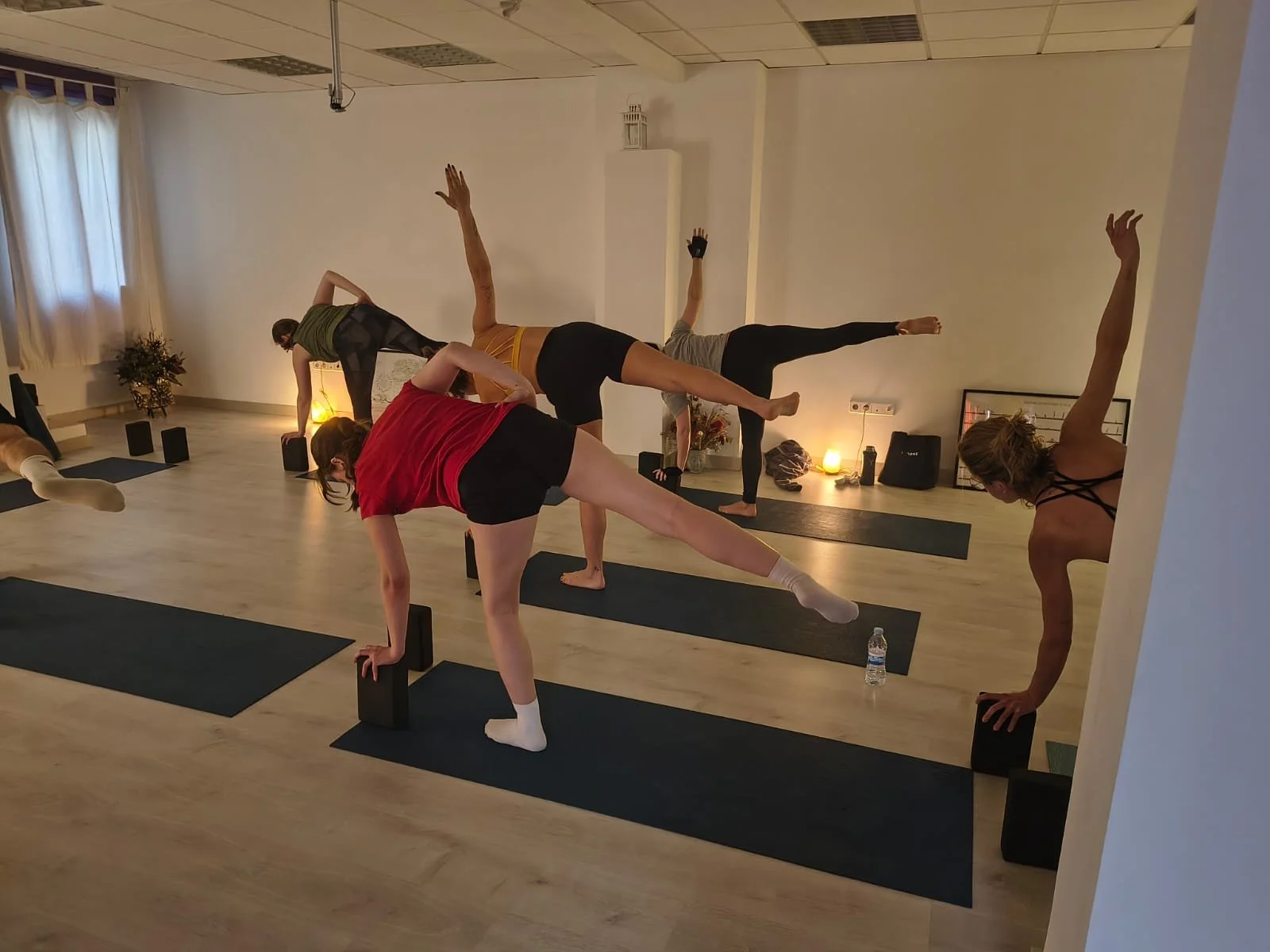
Beginner-friendly yoga class in Madrid taught in English
You Don't Need to Be Flexible (Or Experienced)
Let's start with perhaps the biggest misconception.
You do not need to be flexible, fit, calm, spiritual or experienced to attend a yoga class. Or wear branded clothing unless you want to.
Yoga isn't about performing poses or comparing yourself to anyone else in the room.
It's a practice that meets you where you are.
Many people come to class feeling stiff from sitting at a desk, mentally busy, stressed or just wondering what all the fuss is about.
That's enough.
Arriving at Class
For many people, the hardest part is walking through the door and coming to that first class.
You might wonder:
Will everyone know what they're doing?
Does everyone know each other already?
Will I be able to keep up?
What if I've never done yoga before?
At Atiyasana we always greet you warmly, make you feel at home and like you belong from the moment you walk in.
Beginners are always welcome and there is zero expectation to know the names of poses or get anything "right."
Options are given for all levels of experience and presented as options and modifications.
During class the reality is that most people are far more focused on themselves than looking at anyone else.
You can join in as you are.
What Should I Wear?
Comfortable clothes that allow you to move easily are perfect.
You don't need expensive yoga outfits or special equipment.
For studio classes, mats are often available to borrow, although many people choose to bring their own.
For outdoor yoga in Retiro Park, bringing water, sunscreen and a hat in warmer months can be helpful.
What Happens During a Yoga Class?
Every teacher has their own style, but many classes include:
a short moment to arrive and settle
breathing exercises
gentle warm-ups
standing and seated postures
balance work
stretching and strengthening
relaxation or meditation at the end
Some classes are more dynamic, while others are slower and more restorative.
If you're unsure which style suits you, you might enjoy reading my guide on Hatha Yoga, Yin Yoga and Meditation.
Yoga Is More Than Physical Exercise
While movement is often what brings people to yoga, many students stay because of how it makes them feel.
Traditional yoga includes movement, breathing practices, meditation and philosophy.
In our classes at Atiyasana, we often explore simple themes from yoga philosophy and consider how they apply to everyday life.
This might be contentment (Santosha), non-harming (Ahimsa), or learning to listen to ourselves rather than constantly pushing harder.
You don't need to know anything about yoga philosophy to begin, but many people find these ideas become one of the most meaningful parts of the classes. Learn more about why I include yoga philosophy in my classes here.
Yoga in English in Madrid
If you've recently moved to Madrid or simply feel more comfortable practising in English, attending an English-speaking class can make a big difference.
Being able to fully understand the cues, relax into the experience and connect with others often helps people feel more at ease.
Over time, many students find that yoga becomes about more than movement.
It becomes a place to slow down, reconnect with themselves and build friendships within an international community.
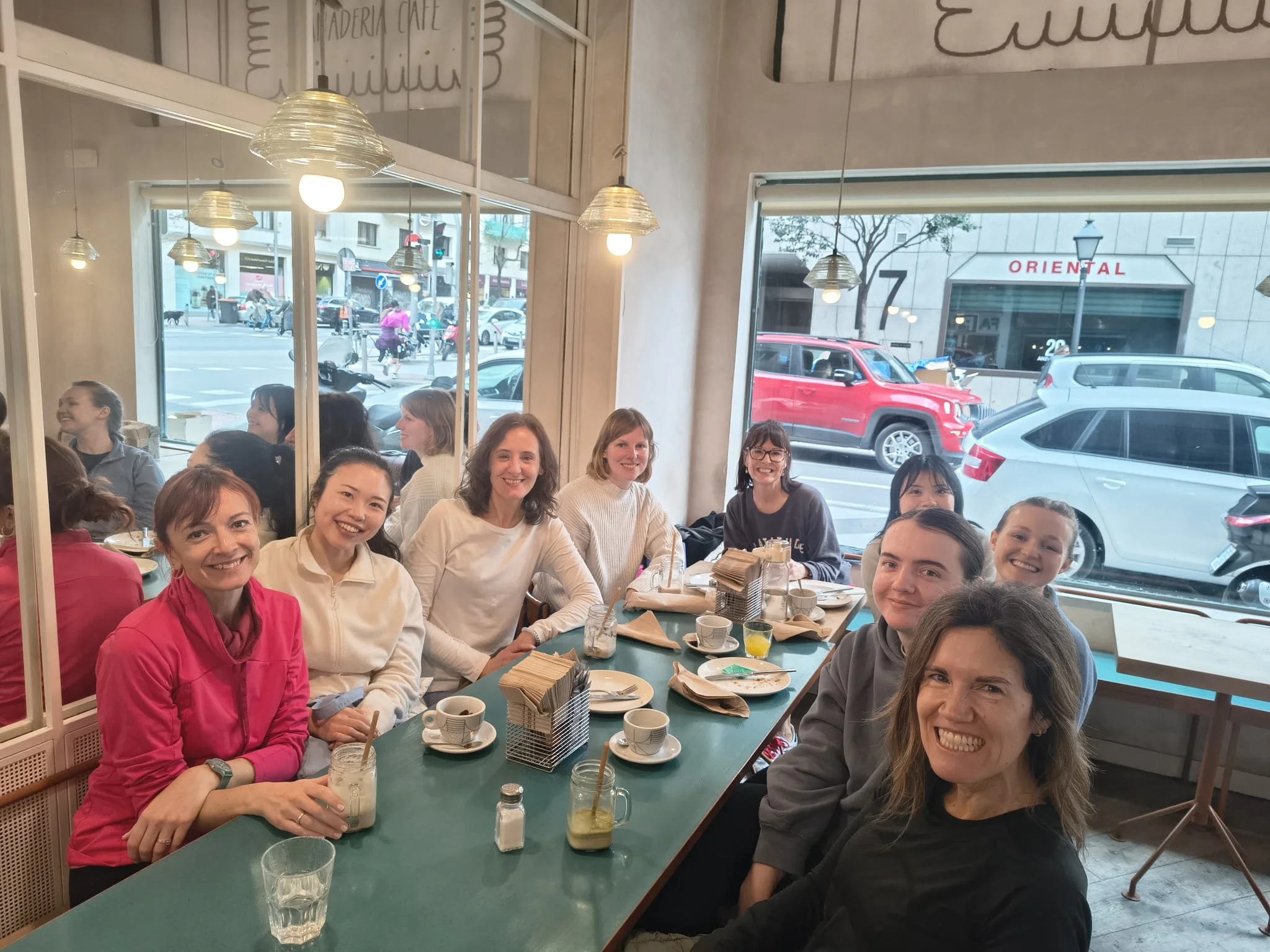
Coffee after Sunday yoga
You Don't Have to Get Anything Right
Perhaps the most important thing to remember is that there is no ‘perfect’ yoga practice.
Some days you'll feel energised.
Other days you might feel distracted, tired or uncoordinated.
That's all part of the experience.
Yoga isn't about achieving a perfect pose.
We aim to focus, become more aware and discover what is good for us in that moment.
If you're wondering how often you need to come to actually get into a routine, I've also written about how often you should practise yoga as a beginner.
Finding the Right Yoga Class in Madrid
The best yoga class isn't necessarily the hardest, the trendiest or the most ‘advanced’.
It's the one that helps you feel more like yourself.
If you're looking for yoga classes in Madrid, we teach Hatha Yoga, Yin Yoga and Meditation in English in both studio settings and Retiro Park during the spring and autumn months.
Alongside weekly classes, many of us stay for coffee after class, picnics, brunches and meet socially throughout the year, making it a lovely way to connect with like-minded people in the city.
If you're not sure where to begin, please read this guide on choosing the right yoga class in Madrid and get in touch if you need any more advice.
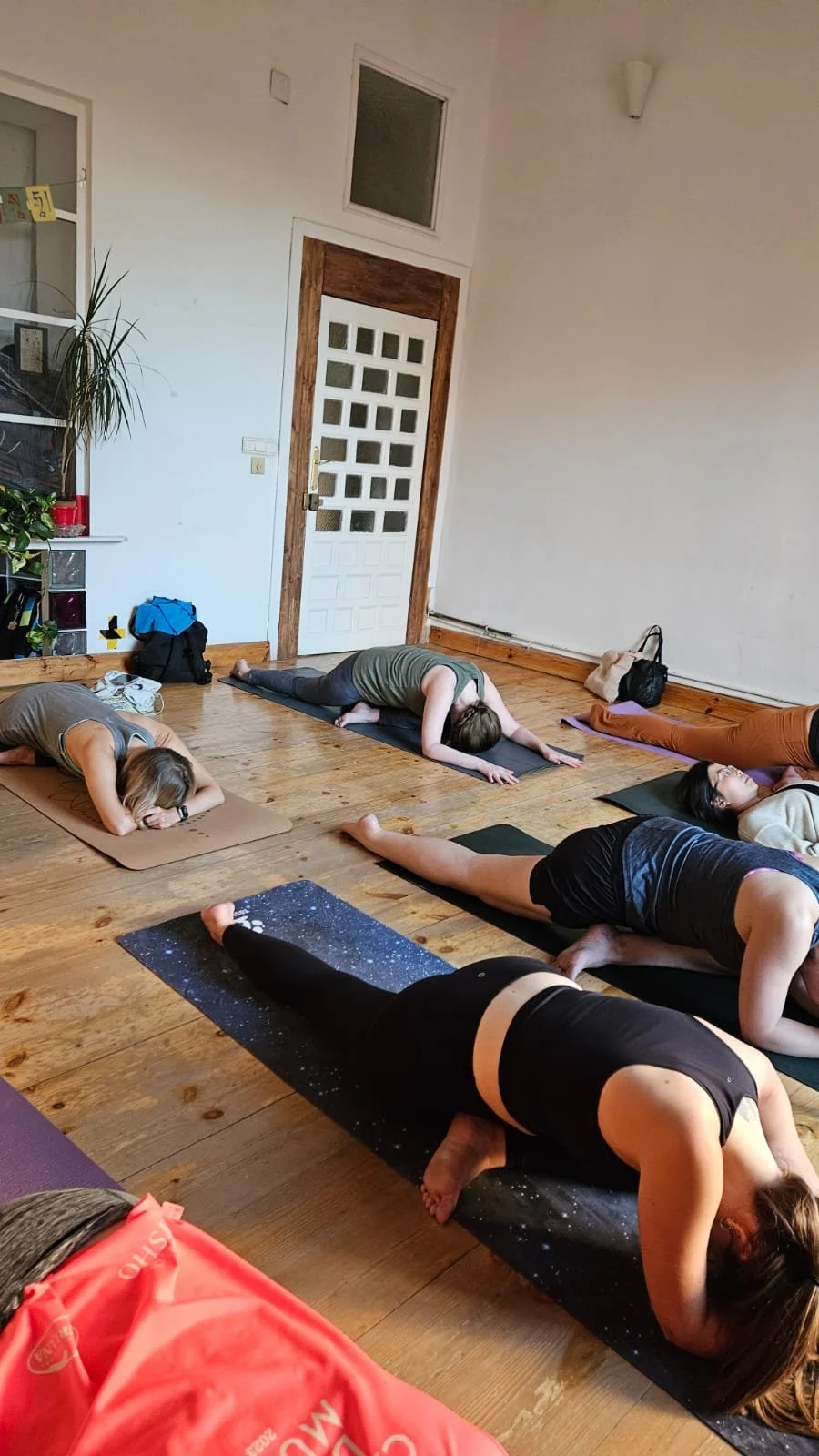
Do I Need to Be Flexible to Start Yoga?
Not flexible enough for yoga? This guide explains why flexibility is not required and what really matters when starting yoga classes in Madrid.
One of the most common things I hear from people before their first yoga class is:
“I’d love to try yoga… but I’m not flexible enough.”
If that’s you, you’re not alone.
It’s probably the biggest misconception about yoga and is also the one that stops most people from ever stepping into a class.
So let’s clear it up right away.
Our Wednesday hatha and yin yoga class
You do NOT need to be flexible to start yoga
Flexibility is not a requirement for yoga at all.
It’s something that may gradually develop over time as a side benefit, but it is never a prerequisite or the purpose.
Yoga is not about how far you can stretch your body.
During a class it’s about how you connect with your breath, your awareness and how you move through your body in a way that feels supportive.
So what happens in a yoga class?
In most beginner-friendly classes, you’ll be guided through simple movements and postures that help you:
build strength
improve mobility
develop balance
connect with your breath
create space in the body and mind
You are never expected to “perform” anything and can always choose an option that suits in that moment.
There is no perfect pose to achieve.
Why do people think they need to be flexible?
Most of what we see online shows advanced poses and people with a dance or gymnastic background with deep backbends, handstands and extreme flexibility.
But that is not the true essence of yoga.
That can be years into someone’s practice and is definitely not necessary or the goal of practising.
Yoga begins and continues with exactly where you are, whether that’s stiff, cautious, keen or enthusiastic.
What if I feel stiff or tight?
That is actually one of the best reasons to start.
Many people come to yoga because they feel:
stiff from sitting at a desk
tight from stress or exercise
disconnected from their body
mentally overwhelmed
Yoga is designed to meet you there, not to require you to already be flexible.
What you actually need for your first class
Honestly, very little:
comfortable clothes
a willingness to try
a bit of curiosity
and sometimes a mat, depending on where you practice.
That’s it.
And you don't need to practise every day either. If you're wondering what a realistic routine looks like when you're starting out, here's how often to practise yoga as a beginner.
What I often see in class
Some of the students who start feeling the “least flexible” are the ones who benefit most over time.
They start to feel more at ease in their body, more comfortable and less tense, alongside the community benefits of meeting other people.
Yoga is not about how you look
One of the most important things to remember is this:
Yoga is not something you get “good” at.
It’s something you experience.
Some days it feels strong. Some days softer. Some days focused. Some days messy.
All of it counts.
If you’re unsure
If you’ve been waiting until you feel “ready” or “flexible enough,” you probably already are.
The first step is simply showing up.
Here is a guide on what to expect for your first class.
Yoga classes in Madrid
If you’re looking for yoga classes in Madrid, I teach Hatha Yoga, Yin Yoga and Meditation in English in both studio and outdoor settings.
Classes are welcoming, accessible and suitable for complete beginners.
If you’re not sure which yoga class is for you, you can read this guide here and you’re always welcome to contact me.
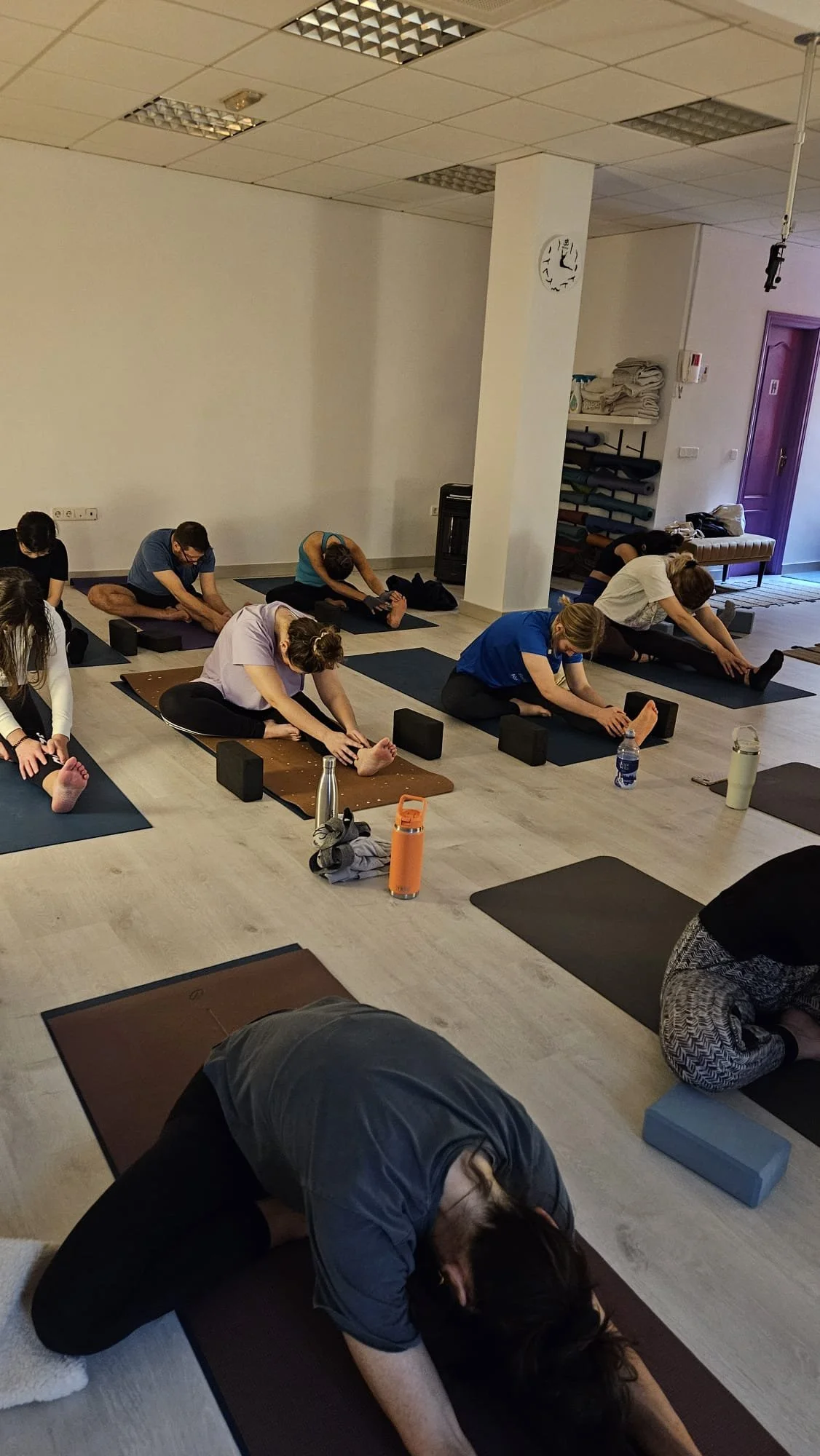
Hatha Yoga, Yin Yoga Or Meditation? How To Choose the Right Yoga Class in Madrid
Not all yoga classes are the same. If you've ever wondered about the difference between Hatha Yoga, Yin Yoga and Meditation, this guide will help you choose the right class for your needs and goals in Madrid.
If you've ever looked at a yoga timetable and wondered which class to choose, you're not alone.
One of the questions I hear most often from new students is:
"What's the difference between Hatha Yoga, Yin Yoga and Meditation?"
Many people assume yoga is one thing, but classes can feel very different depending on the style, pace and focus.
Some classes are more active and movement-based. Others are slower and designed to help you unwind. Some involve very little movement at all.
The good news is that there isn't a right or wrong choice. It simply depends on what you're looking for right now and what you might like.
Whether you're completely new to yoga or looking for classes in Madrid, here's a simple guide to help you decide.
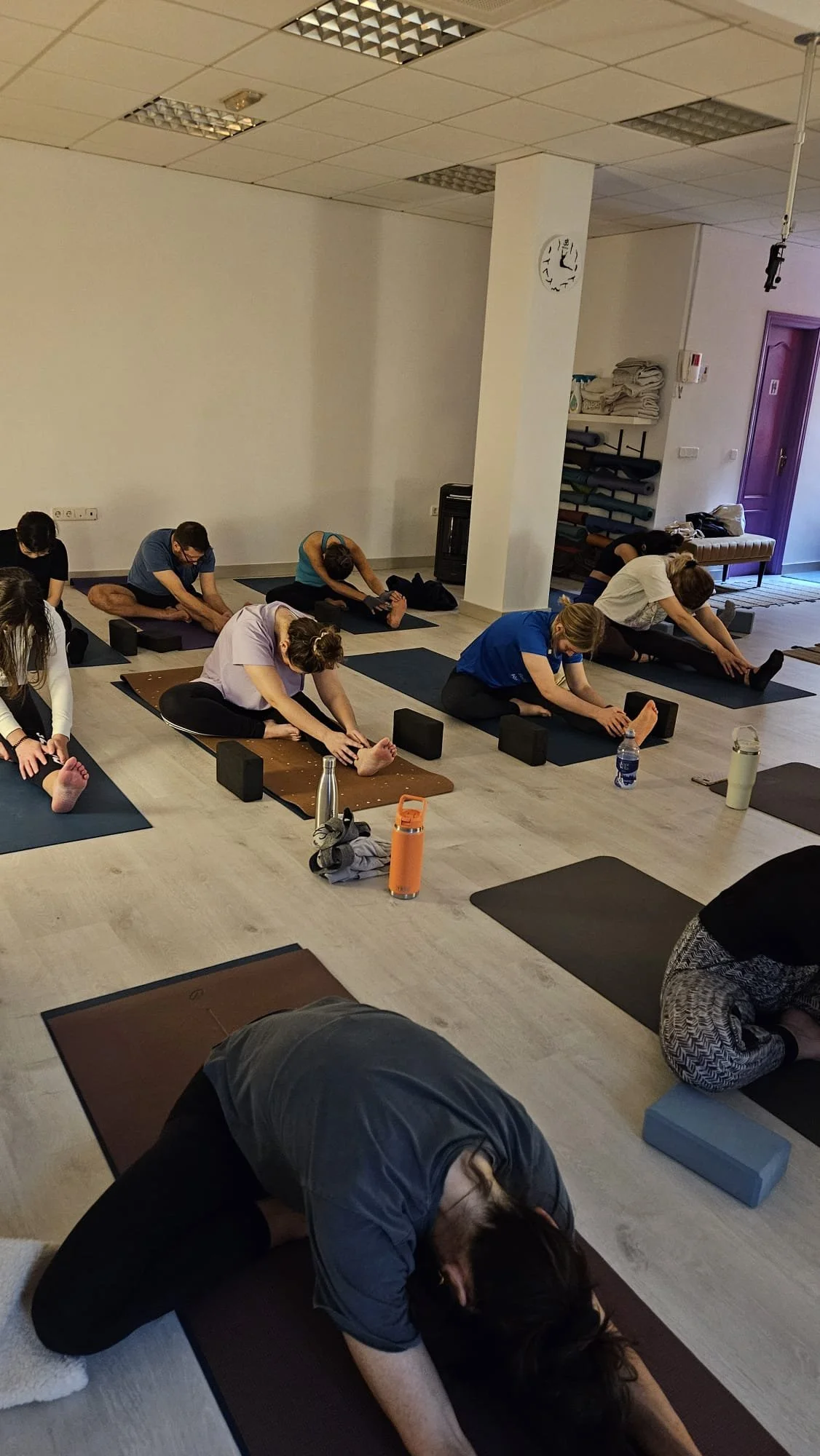
Hatha Yoga in Central Madrid
What Is Hatha Yoga?
Hatha Yoga is often considered the foundation of many modern yoga styles.
In a typical Hatha class, you'll move through a series of postures while connecting movement with your breath. Classes often include gentle warm-ups, sun salutations, a mixture of standing poses, balance work, gentle strengthening, stretching and relaxation.
In my own classes, Hatha Yoga tends to attract people who spend long hours sitting at desks, feel mentally busy or simply want to move their bodies in a way that feels supportive rather than exhausting. Some classes are a bit faster (like more “vinyasa” style) but others are more classic hatha with steady poses held for 3-5 breaths.
You don't need to be flexible, fit or able to touch your toes, despite what you might see on social media. Yoga isn't a performance. A class is an opportunity to explore how movement, breath and awareness feel in your own body.
Many students tell me they leave feeling both more energised and more grounded than when they arrived.
Hatha Yoga may be a good fit if:
You're new to yoga
You want to improve strength, balance and mobility
You spend a lot of time sitting
You enjoy movement but don't want an intense workout
You're looking for a balanced practice
What Is Yin Yoga?
Yin Yoga is a much slower style of yoga.
Rather than moving frequently between postures, you'll stay in each pose for several minutes. The focus is on allowing the body to gradually soften and release, working with the connective tissues of the body (often referred to as fascia), rather than stretch deeply through force.
Many people are surprised by Yin Yoga.
From the outside it can look easy because there is less movement. In reality, slowing down and staying still can sometimes feel more challenging than moving. It is like a meditation in different poses.
Yin Yoga can be particularly helpful if you have a busy lifestyle and rarely give yourself permission to pause.
It's also a useful complement to more active forms of exercise such as running, cycling, strength training or dynamic yoga practices and can help to improve flexibility.
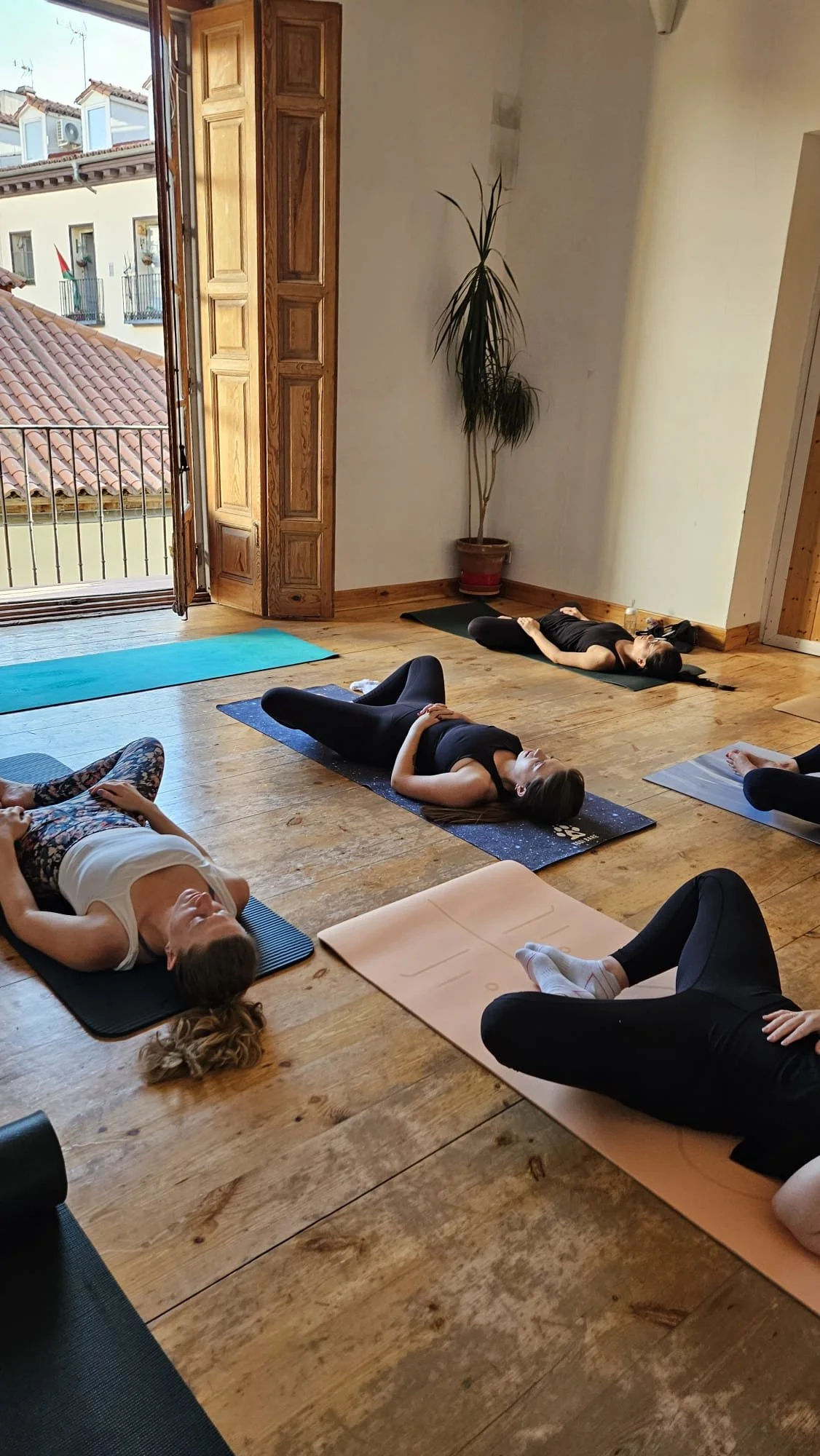
Yin yoga class
Yin Yoga may be a good fit if:
You often feel stressed or overwhelmed
Your body feels tight from exercise or desk work
You struggle to slow down
You want to improve mobility and flexibility
You're looking for a calmer slower practice
What About Meditation?
Meditation is often misunderstood.
Many people think meditation means emptying your mind or stopping your thoughts.
In reality, meditation is more about learning how to observe what's happening without immediately reacting to it.
Some days that might mean noticing your breath.
Other days it might mean noticing how busy your mind feels.
I've found that meditation can be one of the most valuable practices people develop: not because it makes life stress-free, but because it helps us respond differently when stress appears. It doesn’t always have to be a sit-down practice; it can also be walking, through yoga poses or any everyday task.
Like any skill, it becomes easier with practice.
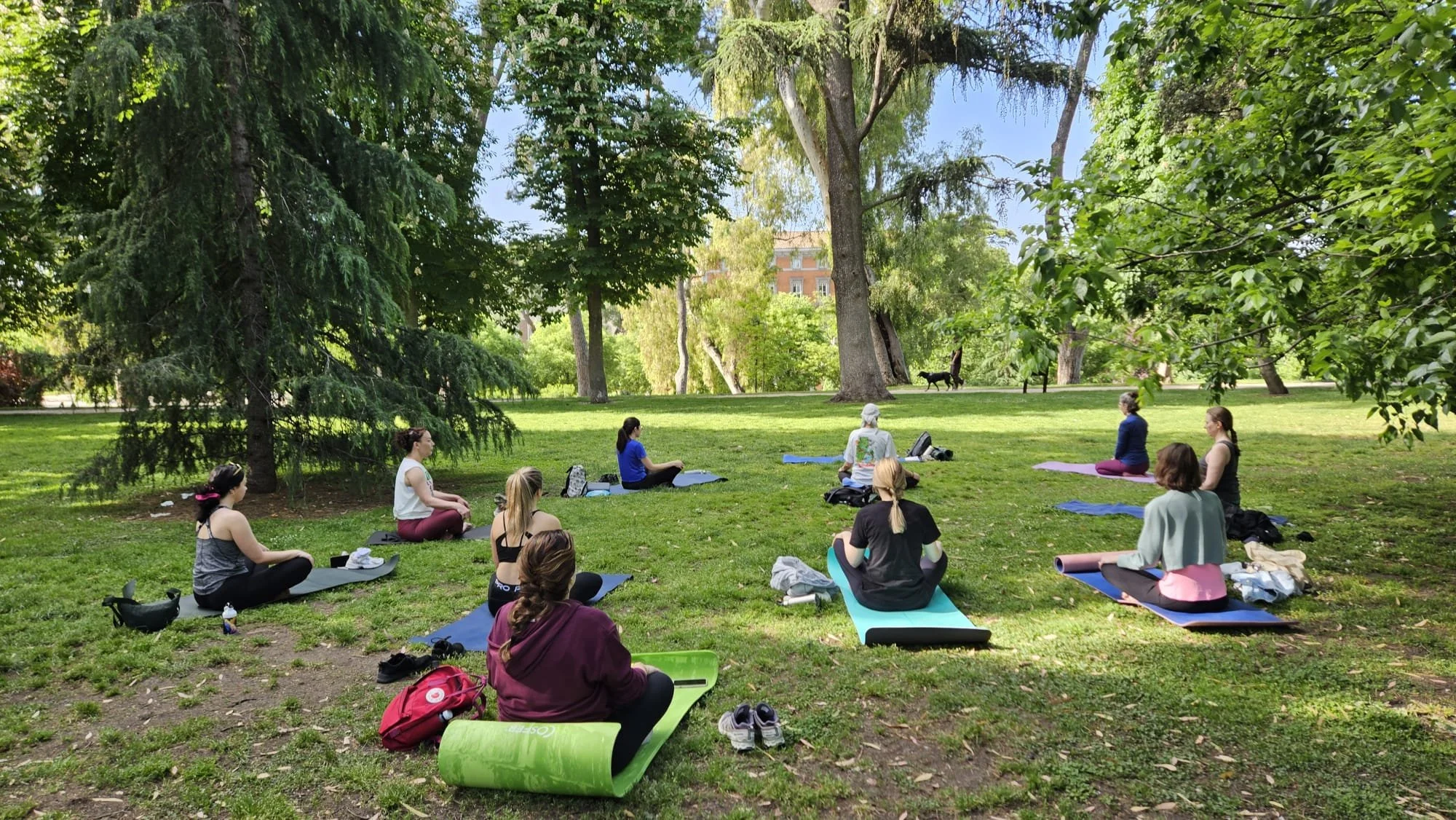
Meditation at the start of a yoga class
Meditation may be a good fit if:
You struggle to switch off mentally
You experience stress or anxiety
You want to improve focus and concentration
You feel constantly busy
You're curious about mindfulness
Which Yoga Class Is Right for You?
If you're still unsure, here's a simple guide.
Choose Hatha Yoga if:
You want movement, stretching and a well-rounded practice.
Choose Yin Yoga if:
You need to slow down and create space in your week.
Choose Meditation if:
Your biggest challenge can often be what's happening in your mind rather than your body.
Of course, many people enjoy a combination of all three.
In fact, some of the students who attend my classes regularly practise Hatha Yoga for movement and strength, Yin Yoga for recovery and meditation is integrated in our classes for mental clarity.
How often you practise, and how you combine different styles, can depend on your schedule and what you need from your practice. Read more about how often to practise yoga as a beginner.
Do You Need To Be Flexible To Start Yoga?
Absolutely not.
This is probably the biggest myth that prevents people from trying yoga.
Flexibility is not a requirement for yoga.
It's something that may improve over time, just as strength, balance and body awareness can improve over time.
Some of the people who benefit most from yoga are those who arrive feeling stiff, stressed and convinced they're "not a yoga person." You can find more about whether you need to be flexible to start yoga here.
Isn't Yoga More Than Physical Postures?
One thing worth mentioning is that yoga is about much more than stretching or improving flexibility.
While physical postures (asana) are often what bring people to class, traditional yoga also includes breathing practices, meditation and philosophy.
In my classes, we often explore simple themes from yoga philosophy and consider how they apply to everyday life. Sometimes this might be contentment (Santosha), non-harming (Ahimsa) or finding balance rather than always pushing harder. Find out more about why I include yoga philosophy in my classes here.
You don't need to know anything about yoga philosophy to attend a class, but many students find these ideas are what keep them coming back long after they've learned the physical poses.
For me, yoga isn't about performing shapes. It's about learning skills that help us navigate daily life with a little more awareness, balance and ease, and that’s something we regularly explore in my yoga classes in Madrid.
Finding the Right Yoga Class in Madrid
The best yoga class isn't necessarily the most popular, the most advanced or the most challenging.
It's the one that helps you feel better and supports what you need right now. Here’s more on what to expect from your first class.
If you're looking for yoga classes in Madrid, I teach Hatha Yoga, Yin Yoga and Meditation in English in both studio and outdoor settings. Classes are welcoming, accessible and suitable for a range of experience levels. You can read more on the benefits of practising in English here.
The easiest way to find out whether a class is right for you is simply to come and try one.
We meet weekly in studios across central Madrid and in Retiro Park during the warmer months for hatha yoga, yin yoga and meditation. Alongside the yoga itself, many people stay for coffee after class every week, and we also have regular picnics, brunches, socials and annual retreats , making it a great way to meet like-minded people and build community in the city.
If you're looking for yoga classes in Madrid that combine movement, mindfulness and community, I'd love to welcome you to a class.