
Yoga Is More Than the Physical Postures: What Are We Really Practising?
Most of us start yoga for physical reasons, perhaps to improve flexibility, build strength or feel better in our bodies. But after practising for a while, you might notice other changes too. You react differently to stressful situations, become more aware of your habits and start to understand yourself a little better. Yoga has always been about more than the postures.
There are lots of good reasons to start practising yoga. Perhaps you want to become more flexible, build strength, improve your balance or move your body after a long day sitting at a desk.
And there's absolutely nothing wrong with any of those reasons. Yoga can be a wonderful way to feel stronger and more comfortable in your body.
But something interesting can happen when you've been practising for a while.
You might notice that you're not reacting to things in quite the same way. Something that would once have frustrated you doesn't bother you as much. You find yourself taking a breath before responding, rather than immediately reacting. Or perhaps you start to recognise when you're stressed or overwhelmed before it gets to the point where you feel completely frazzled and exhausted.
These changes can be subtle. You might not even connect them to your yoga practice at first.
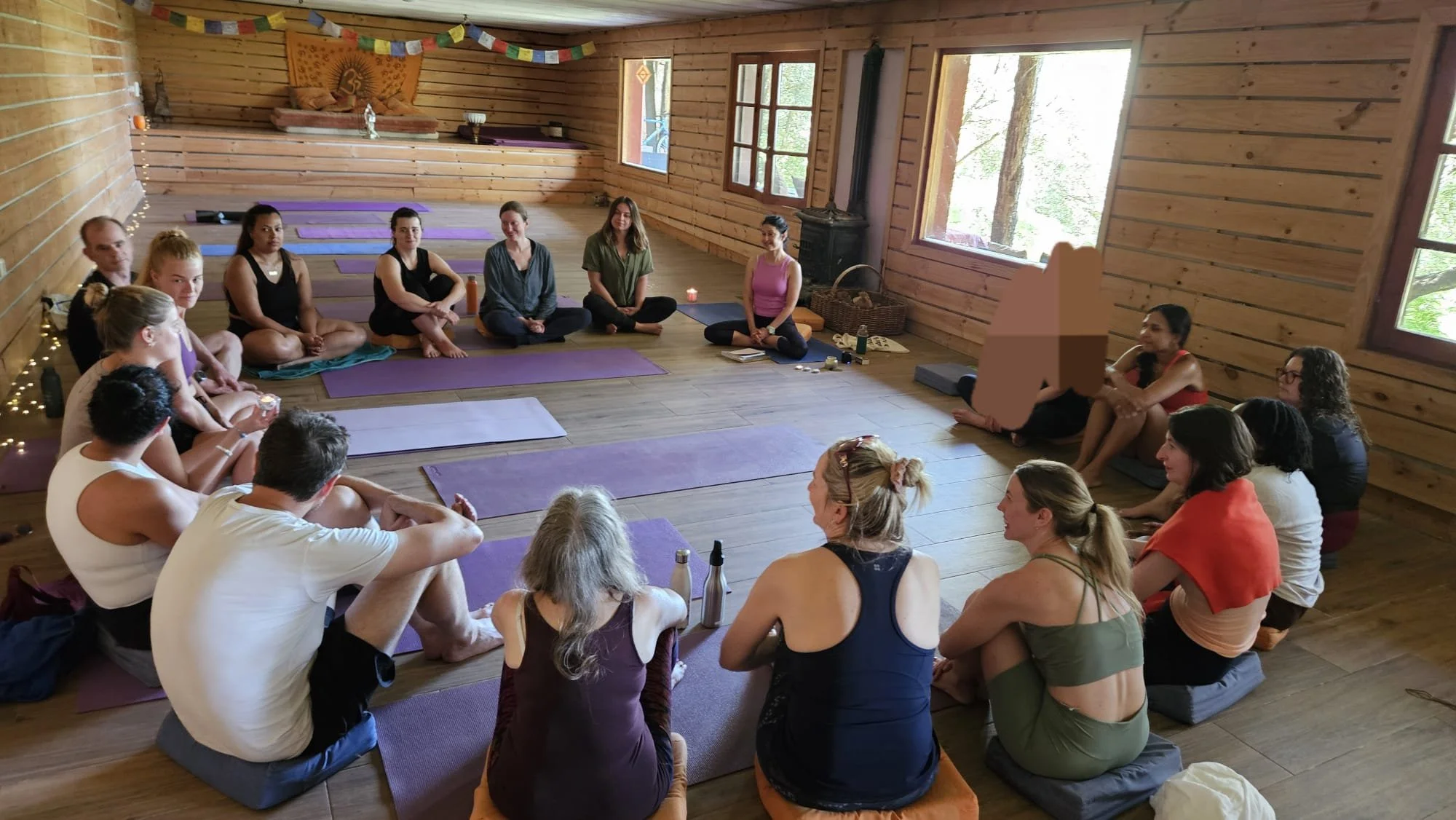
Atiya giving a talk during a yoga retreat
What we're practising beyond the postures
When we practise yoga, we're not only moving our bodies into different shapes. We're also learning to pay attention.
We notice how we're breathing, where we're holding tension and what happens when something feels difficult.
Perhaps you find yourself getting frustrated when you can't balance in tree pose. Maybe you compare yourself to the person next to you, or push a little harder than you need to because you think you ‘should’ be able to do something.
None of these reactions are wrong. They're things we can begin to notice.
And that awareness gives us an opportunity to respond differently.
Maybe you decide to put your foot down in tree pose and try again. Maybe you recognise that you're tired and choose a less demanding variation. Or perhaps you realise that you don't need to prove anything to anyone, including yourself.
These might seem like small moments yet they are part of the practice too.
Learning about ourselves through yoga
One of the things I find most interesting about yoga is how much it can reveal about our habits.
Do we rush through things? Do we get impatient when progress feels slow? Are we comfortable resting, or do we feel we should always be doing something?
Our yoga practice can give us a space to observe these tendencies without necessarily needing to change them immediately.
And sometimes, what we notice in classes starts to become familiar in everyday life.
We might recognise that same impatience when we're stuck in a queue, or notice that we're holding our breath when dealing with a difficult situation at work.
The difference is that we become more aware of what's happening, and a little more able to choose how we respond.
Yoga has always been about more than physical exercise
Although physical postures are often the most visible part of modern yoga, they're only one part of a much broader practice.
In Patanjali's Yoga Sutras, the eight limbs of yoga include ethical principles, physical postures, breath practices, concentration and meditation.
They're concerned not just with what we do with our bodies, but also with how we relate to ourselves, other people and the world around us.
This is one reason I like to include some yoga philosophy in my classes. Not because everyone needs to study ancient texts or know Sanskrit terminology, but because these ideas can help us make sense of what we're experiencing.
Read more about why I include yoga philosophy in my classes.
The changes aren't always obvious
Of course, practising yoga doesn't mean we never feel stressed, lose our patience or have a difficult day.
I certainly don't think the aim is to become someone who is calm all the time.
But with regular practice, we begin to recognise our reactions sooner. We might find it easier to settle after a stressful day, or become more understanding of ourselves when things don't go as planned.
And perhaps one of the biggest changes is that we start to understand ourselves a little better.
We begin to recognise what we need, when to make an effort and when to give ourselves a break.
We can still enjoy becoming stronger, improving our flexibility or working towards a posture we've found challenging. Those things don't disappear.
They're just not the only measure of what we're gaining from practising yoga.
Bringing yoga into everyday life
We don't need to spend hours practising yoga or meditating to experience some of these benefits.
Sometimes it's as simple as noticing our breathing when we're feeling stressed, recognising that we're becoming impatient, or giving ourselves a moment before responding to something difficult.
These are small ways of bringing the awareness we practise in classes into everyday life.
And for me, that's where yoga becomes especially meaningful.
We’re not aiming to be perfect at handling everything that comes our way. Instead we begin to understand ourselves and our reactions a little better.
For me personally, yoga has really helped with anxiety and overthinking. When I first started practising, I noticed a huge difference. Now, regular practice helps me recognise when I'm overthinking and put things into perspective more easily.
You can read more about how yoga can help with stress and overthinking here.
Practising yoga in Madrid
In my yoga classes in English in Madrid, we work on strength, flexibility, balance, movement and we include breathing, awareness and yoga philosophy.
You don't need any previous experience or knowledge of yoga philosophy to join us.
Explore my yoga classes in English in Madrid and find a class that suits you.

A New Yoga Studio in Central Madrid: Meet Atiyasana Yoga Social
A new chapter for Atiyasana is taking shape on Calle de la Amnistía in Ópera, central Madrid. Discover the idea behind our upcoming yoga studio, the classes we're planning and how to hear about our presale.
Since early 2019 Atiyasana has brought people together through yoga classes in Retiro Park and other locations around Madrid. Now we’re getting ready for a new chapter: opening Atiyasana Yoga Social, a yoga studio in Ópera, central Madrid.
The idea has been taking shape for a while and I'm excited to create a permanent home for our classes and community. A place to move, breathe, explore yoga beyond the physical postures and get to know other people along the way.
We're still working through the licensing process, so I can't confirm an opening date just yet. In the meantime I wanted to share a bit about the studio, what I'm hoping to create there and how you can hear about the opening.
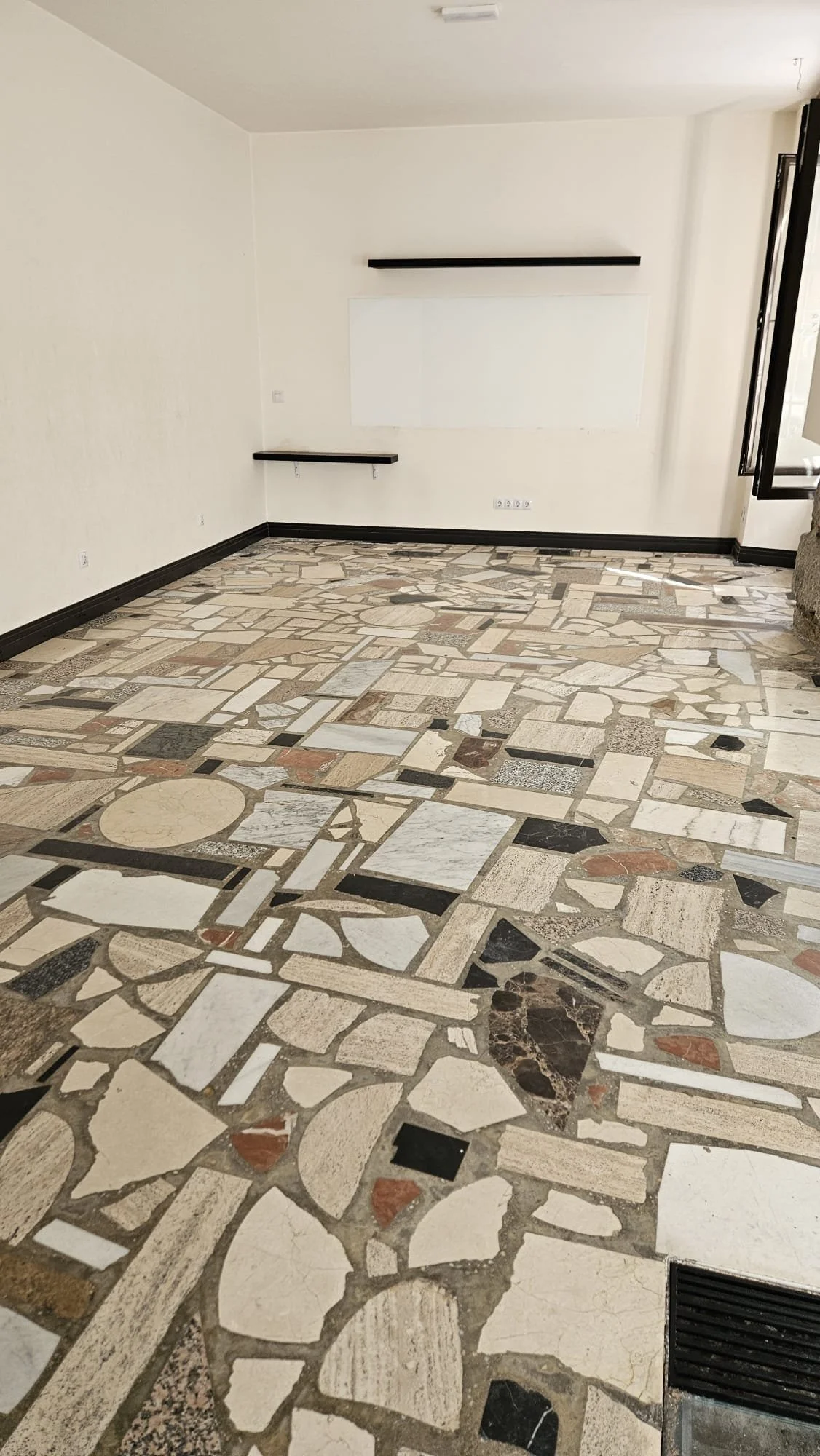
Atiyasana Yoga Social studio coming soon to Ópera, central Madrid
A new English-speaking yoga studio in Ópera, Madrid Centro
If you're looking for a yoga studio in central Madrid where you can practise in English, Atiyasana Yoga Social will be opening at Calle de la Amnistía, 2, in the historic Ópera neighbourhood.
We're close to some of Madrid's best-known landmarks, including the Teatro Real and the Royal Palace, making the studio a convenient option if you live, work or spend time in Madrid Centro.
The location is particularly well suited to anyone searching for yoga near Ópera or looking for English-language yoga classes in the city centre (nearest metros are Ópera, Sol, Santa Domingo). It's also within reach of the surrounding central neighbourhoods, so you can fit a class into your week without having to travel across Madrid.
The studio will offer a range of classes, including Hatha with Vinyasa-style sequences, Slow Hatha Yoga, Yin yoga and meditation. With space for around 12 students, we're building a small, welcoming community where you can get to know the people you practise with.
Whether you're new to Madrid, have lived here for years, are looking for a regular yoga class near home or work, or simply hoping to meet people while doing something good for yourself, we'd love to welcome you.
For me, yoga has always been about more than what happens in class. It's also about how we pay attention, how we relate to ourselves and others and the communities we create over a shared interest.
What kind of yoga classes will be offered?
The studio will bring together the different elements of yoga that the team and I love teaching, with classes to suit different needs and energy levels.
Hatha yoga
Our Hatha classes will include a mix of approaches, from more considered, steady practice to Vinyasa-style sequences that link movement with breath. Some classes may be more dynamic, while others will take a slow hatha approach, giving more time to explore individual postures and settle into the practice.
The aim is to offer a varied physical practice that builds strength, mobility and body awareness, while paying attention to how movement feels rather than simply what a posture looks like.
Yin yoga
Yin is a slower, more passive practice in which we spend longer in postures, allowing time to explore sensation and stillness. It offers a different experience from a more active class and can be a useful balance to busy days and full schedules.
Meditation
Meditation will be included within our classes. Meditation gives us an opportunity to practise paying attention in a different way. You don't need to arrive feeling calm or have experience sitting in silence. It's a practice we can explore together, one step at a time.
We'll continue to combine movement, rest and reflection in ways that make yoga accessible and relevant to everyday life. Yoga doesn't have to be about pushing harder, being naturally flexible or trying to become a different person.
Alongside our regular classes, I'm looking forward to exploring workshops and other opportunities to come together, learn and spend time in the community.
If you're unsure which style might suit you, you can read my guide to Hatha yoga, Yin yoga and meditation: how to choose the right class in Madrid.
More than a place to practise yoga
One of the things I've valued most about teaching in Madrid is seeing people arrive at class without knowing anyone and gradually become part of a community.
Moving to a new city can be exciting, but it can also take time to find your people. Even when you've lived somewhere for years, it isn't always easy to build regular opportunities to meet others beyond work or your existing social circle.
Our classes have brought together people from different countries, backgrounds and stages of life. Some come primarily for the physical practice; others appreciate having a regular place to pause during the week or the chance to get to know people outside their usual routines.
That's a big part of what I want Atiyasana Yoga Social to be: a place where you can come as you are, practise yoga in English and gradually feel connected to the people around you.
If you're new to Madrid, I've written more about finding a yoga community in English and wellness communities for expats in Madrid.
Yoga that fits real life
I started teaching yoga in 2011 and my approach has continued to develop through my own practice, teaching experience and ongoing interest in yoga philosophy.
I love the physical practice and I also value the questions yoga invites us to consider: how we respond when things don't go to plan, where we place our attention and how we treat ourselves and the people around us.
These ideas don't need to stay on the mat. They can be part of how we navigate a busy working week, deal with uncertainty or make space for rest without feeling we've had to earn it.
I want the studio to reflect that broader understanding of yoga. There'll be room to move and build strength, but also to slow down, reflect and explore. You won't need to touch your toes, know the Sanskrit names of postures or arrive feeling peaceful.
If you'd like to explore this side of the practice, you can read why I include yoga philosophy in my classes.
Is the studio suitable if I'm new to yoga?
Yes. You don't need to have practised yoga before, and you don't need to be flexible.
People come to yoga for all sorts of reasons: to move more, manage stress, try something new or find a regular activity that helps them feel more connected to themselves and others. You don't have to arrive with a particular goal or know exactly what you're looking for.
We'll aim to make classes welcoming and accessible, with options to adapt the practice to your needs and experience.
If it's your first time, I've put together a guide to what to expect in your first yoga class in Madrid.
When will Atiyasana Yoga Social open?
We're currently working through the licensing process, so the opening date has’t been confirmed yet. I'll share more information as soon as I can.
Once the date is confirmed, I'll also be able to share details of the presale offer for people who'd like to be among the first to practise in the new studio.
If you'd like to hear the news first, sign up for the studio presale announcement here.
In the meantime, our current yoga classes are continuing at other locations around Madrid. You can find the latest timetable, locations, booking options and more information on our yoga classes page.
Atiyasana Yoga Social is coming soon to Calle de la Amnistía, 2, in Ópera, central Madrid.
I'm looking forward to bringing our classes together under one roof and creating a space where people can practise regularly, get to know one another and explore what yoga can offer in everyday life.
Whether you're new to Madrid, new to yoga or looking for a different place to practise, I hope you'll come and see us.
Sign up below to receive the opening news and details of our presale offer as soon as they're confirmed.